Lockout/Tagout Compliance for Industrial Facilities
September 15, 2026 | Samantha Mariano
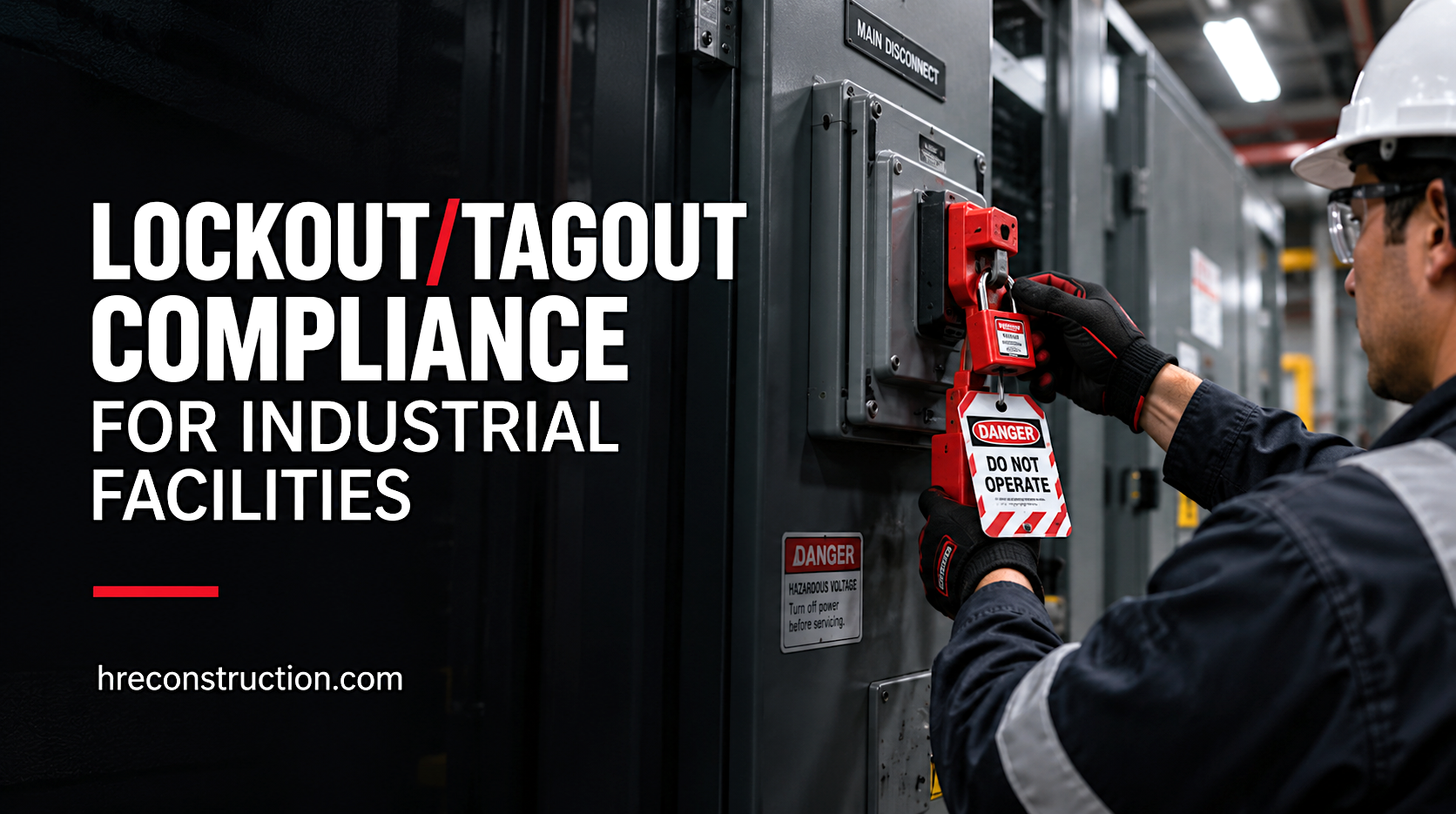
Lockout/tagout is one of the most cited OSHA standards in general industry every year, and it stays that way for a simple reason. Most violations do not come from a piece of equipment failing. They come from a missing written procedure, a training gap, or a skipped annual inspection. It is one piece of a facility's broader electrical safety compliance program, but it deserves its own close look since it is also one of the easiest gaps for an inspector to find. For an industrial facility running motors, PLCs, and switchgear around the clock, that is a compliance gap that is entirely preventable.
What OSHA 1910.147 Actually Requires
29 CFR 1910.147, the Control of Hazardous Energy standard, requires employers to develop written, machine-specific energy control procedures for any equipment where unexpected startup or release of stored energy could injure a worker. That covers electrical, mechanical, hydraulic, pneumatic, chemical, and thermal energy sources, including stored energy like residual pressure in a hydraulic line or tension held in a spring.
The standard applies any time a worker needs to remove or bypass a machine guard, or place any part of their body into a machine's point of operation or another danger zone during servicing or maintenance. A generic plant-wide procedure does not satisfy this. Each piece of equipment needs its own documented steps for isolating and verifying zero energy state.
Lockout vs. Tagout
The two terms get used together so often that the difference gets lost. A lockout device physically restrains an energy-isolating device so it cannot be operated. A tagout device is a warning tag only. It does not physically prevent re-energization.
OSHA requires lockout whenever the isolating device is capable of accepting a lock. Tagout alone is only permitted when the device cannot physically accept a lock, or when the employer can demonstrate that tagout provides a level of protection fully equivalent to lockout.
Training Requirements
1910.147(c)(7) breaks training into three tiers based on each employee's relationship to the equipment being locked out:
- Authorized employees, who perform the lockout, need in-depth training on the energy sources present and the specific procedure for each machine they service.
- Affected employees, who operate or work near the equipment but do not perform the lockout, need enough training to recognize a lockout in progress and understand why they cannot attempt to restart the equipment.
- Other employees working in the area need general awareness training.
Retraining is required whenever job assignments change, equipment or processes change, or a periodic inspection reveals gaps in an employee's understanding of the procedure.
Annual Inspections and Documentation
The standard requires at least one periodic inspection of each energy control procedure per year, and both the training and the inspection have to be certified in writing. This is the piece that most often gets missed in practice. A facility can have solid procedures on paper and still be out of compliance if nobody can produce documentation that those procedures were actually reviewed and the affected employees actually trained.
Contractors and Outside Personnel
When contractors perform servicing or maintenance at your facility, 1910.147(f)(2) requires the on-site and off-site employers to inform each other of their respective lockout or tagout procedures, and the outside personnel must comply with the host facility's program while on site. If more than one crew or trade is working on the same equipment at the same time, a group lockout procedure has to be in place so that no individual worker's protection depends on someone else remembering to leave their lock on.
How HRE Can Help
HRE Construction works with industrial facilities across the Southeast to build out energy control programs that hold up under an actual OSHA inspection, not just on paper. That includes developing machine-specific lockout procedures for new and existing equipment, identifying every energy source on a piece of machinery during electrical work and commissioning, and flagging gaps in documentation or training tiers before they become findings. Because our team is already on-site for electrical maintenance, testing, and commissioning work, energy isolation procedures get built into the process rather than treated as a separate compliance exercise.
Get Your Facility's Energy Control Program Reviewed
If your lockout/tagout procedures have not been reviewed in the last year, or if newer equipment on your floor does not have a documented procedure yet, that is worth closing before an inspection finds it first. Contact HRE Construction to talk through your facility's energy control program and where the gaps might be.
Frequently Asked Questions
What is the difference between lockout and tagout?
A lockout device physically restrains an energy-isolating device so equipment cannot be operated. A tagout device is a warning tag that does not physically prevent re-energization. OSHA requires lockout whenever the device can accept a lock and allows tagout only when it cannot, or when equivalent protection is demonstrated.
Who needs lockout/tagout training?
OSHA 1910.147 requires three tiers of training. Authorized employees who perform the lockout need in-depth training on each machine's procedure. Affected employees who work near the equipment need to recognize a lockout in progress. Other employees in the area need general awareness training.
How often must lockout/tagout procedures be inspected?
At least once per year. Each periodic inspection has to be certified in writing, along with the related employee training, since documentation gaps are one of the most common reasons facilities are cited under this standard.
Does 1910.147 apply to contractors working at our facility?
Yes. When outside personnel perform servicing or maintenance, both the host facility and the contractor's employer are required to share their lockout/tagout procedures, and the contractor must follow the host facility's program while working on site.