Electrical Preventive Maintenance for Industrial Facilities: What a Real Program Looks Like
June 10, 2026 | Samantha Mariano
Introduction
Electrical failures in industrial facilities rarely happen out of nowhere. Most of them are the result of deferred maintenance, aging infrastructure, or systems that were never put on a regular inspection schedule. A structured preventive maintenance program changes that — and for facilities running continuous or high-demand operations, it's not optional.
This post breaks down what a real industrial electrical preventive maintenance program looks like, what it covers, and why the approach matters more than the frequency.
What Electrical Preventive Maintenance Actually Means in an Industrial Setting
Preventive maintenance in an industrial electrical context means scheduled, proactive inspections and servicing of your electrical systems before a problem develops. It is not reactive. It is not waiting for a breaker to trip or a motor to fail before calling someone.
For industrial facilities, this includes everything from high-voltage distribution equipment and switchgear to motor control centers, transformers, grounding systems, and instrumentation. The goal is to identify deterioration, loose connections, thermal anomalies, and code gaps before they cause unplanned downtime or a safety incident.
What a Structured Program Covers
A properly built electrical preventive maintenance program for an industrial facility typically includes the following components:
Infrared Thermography (Thermal Imaging)
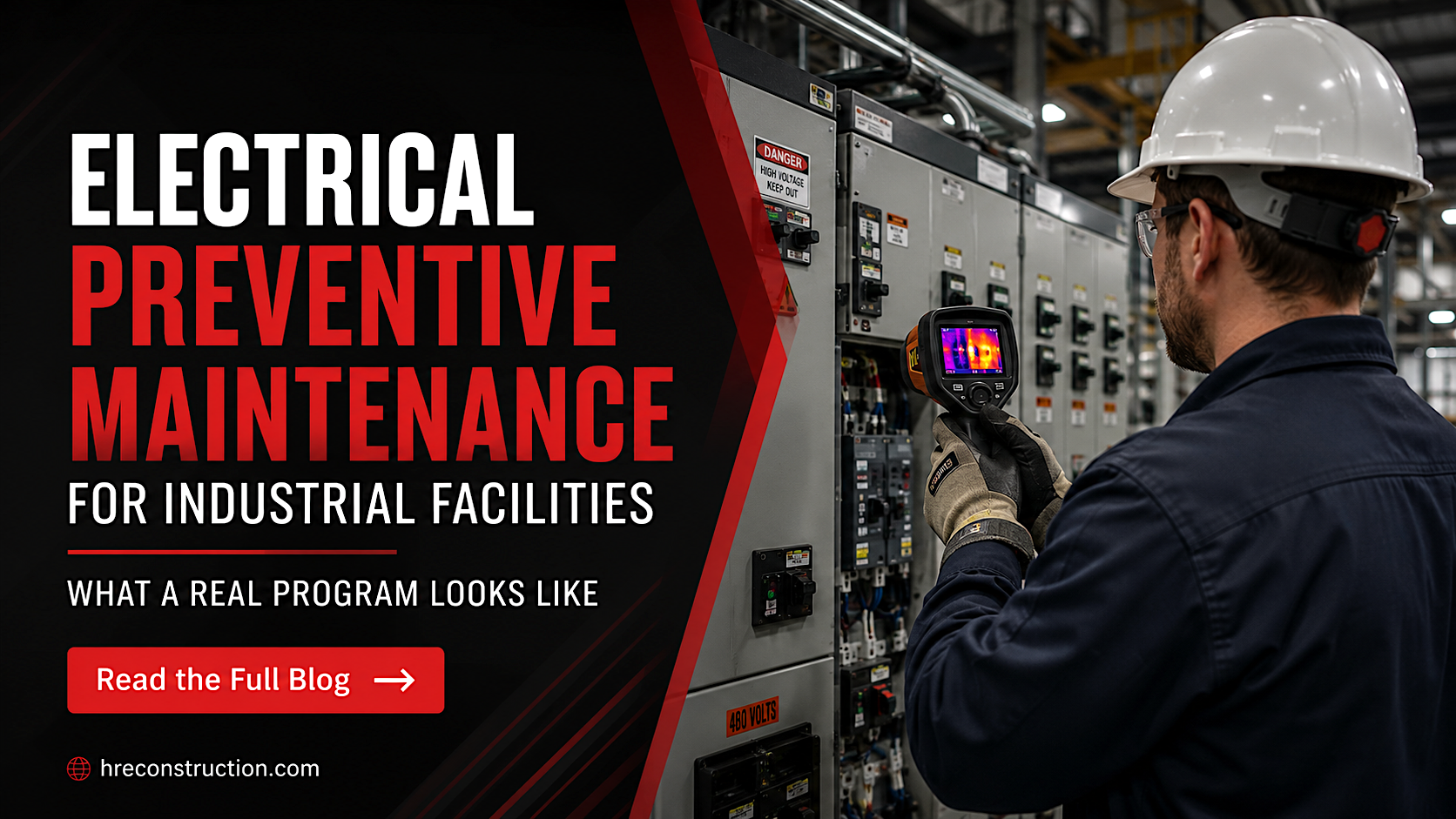
Thermal scanning identifies hot spots in panels, breakers, bus bars, and connections that are invisible to the naked eye. Overheating connections are one of the leading causes of electrical failures in industrial settings. Regular IR scanning catches them before they become failures.
Electrical Panel and Switchgear Inspections
Panels and switchgear need periodic visual and physical inspection — checking for corrosion, loose lugs, arc flash damage, proper labeling, and signs of overloading. Switchgear that hasn't been inspected in years is a liability.
Motor and MCC Testing
Motors and motor control centers take a beating in industrial environments. Insulation resistance testing, vibration analysis, and visual checks on contactors and overloads should be part of any regular maintenance cycle.
Grounding and Bonding Verification
Grounding systems degrade over time, especially in facilities with corrosive environments or soil conditions that accelerate resistance changes. Verifying grounding integrity is a critical but often overlooked part of industrial electrical maintenance.
Arc Flash Study Updates
If your facility has expanded, added equipment, or modified its electrical distribution, your arc flash study may no longer be accurate. Outdated arc flash data puts workers at risk and creates compliance exposure. Preventive maintenance programs should include a review of arc flash documentation on a regular cycle.
Load Analysis and Capacity Checks
Industrial facilities evolve. Equipment gets added, processes change, and electrical loads shift. Regular load analysis ensures your system isn't being pushed beyond its design capacity — which is one of the most common causes of breaker trips and overheating in active plants.
How Often Should Industrial Electrical Maintenance Be Performed?
Frequency depends on the facility, the criticality of the equipment, and the operating environment. A general framework looks like this:
Monthly checks cover visual inspections of panels, breakers, and control equipment for obvious signs of damage or heat.
Quarterly checks include more detailed inspections of MCCs, transformers, and distribution equipment, along with any systems in harsh or high-humidity environments.
Annual inspections should cover a full facility walkthrough, thermal imaging, insulation resistance testing on critical motors and feeders, and a review of arc flash documentation.
Every three to five years, a full electrical system study — including load flow analysis and arc flash updates — should be completed, especially after any significant facility changes.
The Real Cost of Skipping It
Unplanned electrical downtime in an industrial facility costs far more than a maintenance program. Between lost production, emergency labor rates, expedited parts, and potential equipment damage, a single major failure can run into tens or hundreds of thousands of dollars depending on the operation.
Beyond cost, there are safety and compliance implications. Facilities operating with uninspected or poorly maintained electrical systems are exposed to OSHA citations, insurance issues, and in the worst cases, fires or arc flash incidents that put workers at serious risk.
A preventive maintenance program is not an expense. It is what keeps the larger expenses from happening.
How HRE Can Help
HRE Construction provides industrial electrical preventive maintenance services for facilities across the Southeast and beyond. With 30+ years of experience working in industrial environments, our team understands what these systems need and what to look for before problems develop.
We work with facility managers to build maintenance schedules that fit their operations — not a one-size-fits-all checklist. Whether you need a one-time assessment or an ongoing maintenance partnership, we bring the experience and the manpower to get it done right.
HRE is licensed in North Carolina, South Carolina, Georgia, Ohio, West Virginia, Texas, Kentucky, Arkansas, Arizona, Louisiana, and Mississippi.
Ready to Build a Maintenance Program That Actually Works?
If your facility doesn't have a structured electrical preventive maintenance program in place — or if it has been a while since your last full inspection — now is the time to get ahead of it.
Contact HRE Construction to discuss your facility's needs, or visit our Services page to learn more about what we do.
FAQ:
What is electrical preventive maintenance for industrial facilities?
It is a scheduled program of inspections, testing, and servicing of electrical systems designed to identify and address issues before they cause equipment failure, downtime, or safety incidents.
How often should industrial electrical systems be inspected?
Most industrial facilities benefit from monthly visual checks, quarterly detailed inspections, and a full annual inspection that includes thermal imaging and insulation resistance testing.
What does an industrial electrical maintenance program include?
A complete program typically covers thermal imaging, panel and switchgear inspections, motor and MCC testing, grounding verification, arc flash study reviews, and load analysis.
Why is electrical preventive maintenance important in industrial settings?
Industrial electrical systems operate under heavy, continuous loads in demanding environments. Without regular maintenance, small issues escalate into failures that cause costly unplanned downtime and create safety hazards.
Does HRE Construction offer preventive maintenance services?
Yes. HRE Construction provides industrial electrical preventive maintenance across 11 states. Contact us at hreconstruction.com to discuss your facility's needs.