How Aging Electrical Infrastructure Is Putting Industrial Facilities at Risk
May 25, 2026 | Samantha Mariano
Introduction
Industrial facilities are built to last. The equipment inside them, however, has limits. Electrical infrastructure that was installed decades ago was designed for the load demands of that era, not the demands of today's operations. As facilities grow, add new equipment, and push their systems harder, aging electrical infrastructure becomes one of the most serious risks a plant can face.
The problem is that many facilities don't take action until something fails. By then, the cost is rarely just a repair bill.
What Counts as Aging Electrical Infrastructure?
Electrical infrastructure includes everything that generates, distributes, and protects power throughout your facility. That means switchgear, transformers, circuit breakers, wiring, conduit systems, panelboards, and motor control centers.
Most of this equipment has a functional lifespan of 25 to 40 years depending on usage, environment, and maintenance history. In many industrial facilities across the U.S., a significant portion of this equipment was installed in the 1980s and 1990s and has never been fully replaced or upgraded.
That alone is worth paying attention to.
Why Aging Infrastructure Becomes a Problem
It Was Not Designed for Today's Loads
Industrial operations have changed significantly over the past few decades. Automation, variable frequency drives, updated production lines, and expanded capacity all place demands on electrical systems that the original design never accounted for. When you push more load through infrastructure that was sized for a different era, you create conditions for overheating, tripped breakers, and eventual failure.
Protective Devices Lose Reliability Over Time
Circuit breakers and protective relays are mechanical and electronic devices that degrade with age. A breaker that has not been tested or maintained in years may not trip when it should, or it may trip when it should not. Either scenario creates serious problems, ranging from unplanned downtime to arc flash events that put workers at risk.
Replacement Parts Become Harder to Source
Equipment that is 30 or 40 years old often falls outside of active manufacturer support. When a component fails, finding a direct replacement takes time, and that delay compounds downtime. In some cases, facilities end up waiting weeks for parts that would take days to source for more current equipment.
Code Compliance Gaps Accumulate
Electrical codes are updated regularly to reflect new safety standards and best practices. Older infrastructure may have been installed to the code of its time but falls short of current National Electrical Code requirements. This creates liability exposure, particularly during facility audits, insurance reviews, or after an incident.
Warning Signs Your Facility Should Not Ignore
Not every facility knows exactly how old its electrical infrastructure is or how much wear it has accumulated. These are some of the warning signs that point to deeper problems worth investigating:
- Breakers that trip frequently without a clear cause
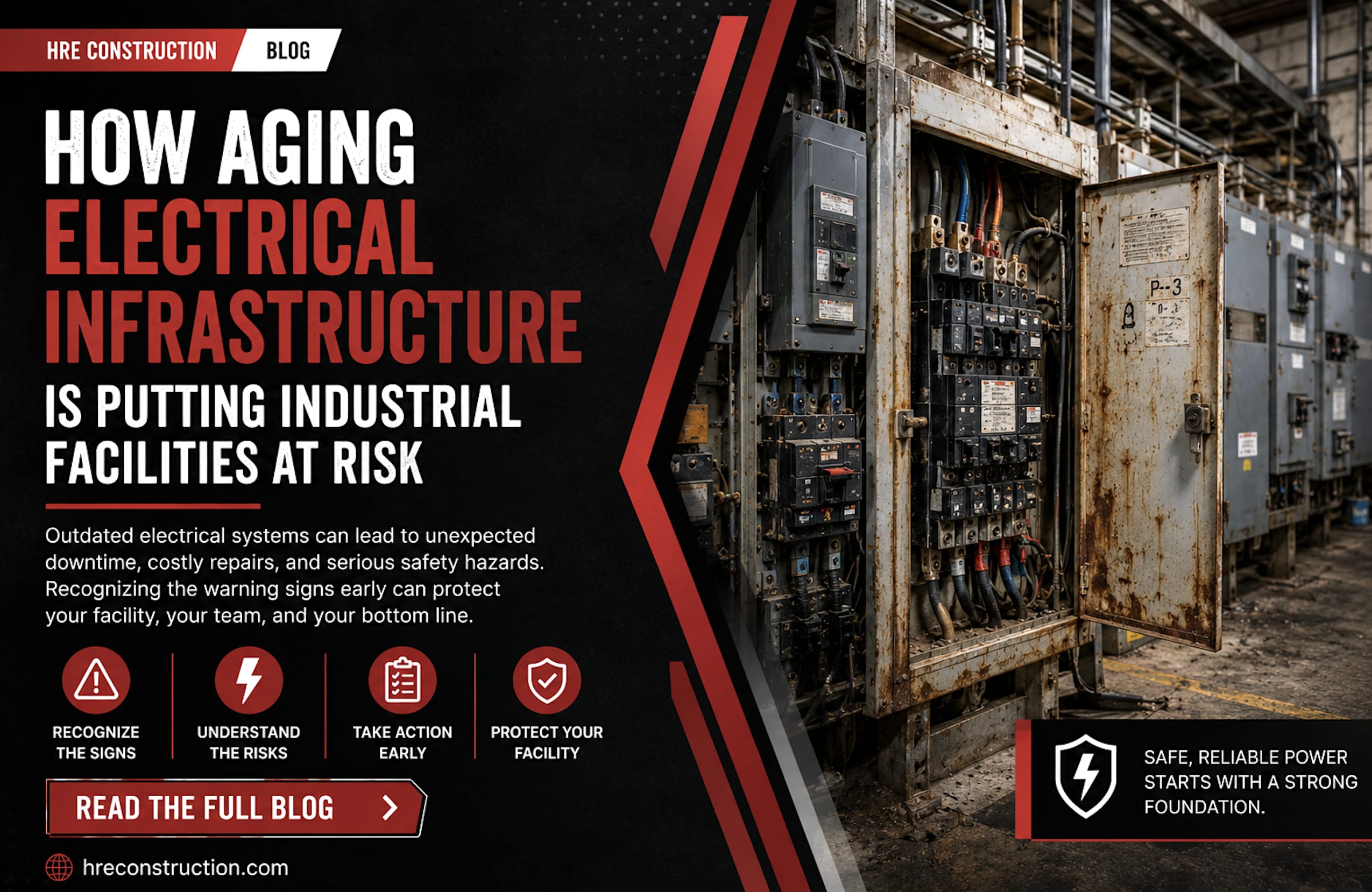
- Visible corrosion or discoloration on panels and switchgear
- Unexplained power quality issues affecting equipment performance
- Equipment that runs hot without obvious reason
- A history of unplanned outages that have never been fully diagnosed
- Electrical rooms that show signs of moisture intrusion or heat damage
- No record of the last time protective devices were tested or maintained
Any one of these is worth taking seriously. When several are present at the same time, it is a strong signal that a formal assessment is overdue.
How HRE Can Help
HRE Construction works with industrial facilities to assess, maintain, and upgrade electrical infrastructure before problems become emergencies. Our team has experience working inside active industrial environments, which means we understand the operational constraints that come with this kind of work.
We can help with:
- Electrical system assessments and condition evaluations
- Switchgear and panelboard replacements
- Transformer and distribution system upgrades
- Protective device testing and maintenance
- Code compliance reviews
- Load analysis to confirm your current system can support your operations
If your facility has not had a formal electrical assessment in the last few years, that is a practical place to start.
Frequently Asked Questions
How do I know if my facility's electrical infrastructure needs to be upgraded?
The most reliable way is to have a qualified industrial electrician conduct a full assessment. That said, frequent breaker trips, power quality issues, overheating equipment, and infrastructure that is 25 years or older are all common indicators.
Can aging electrical infrastructure affect equipment performance?
Yes. Power quality issues caused by degraded infrastructure can affect motor performance, reduce equipment lifespan, and cause erratic behavior in automated systems.
How disruptive is an electrical infrastructure upgrade?
That depends on the scope of the work and the facility's operational schedule. HRE Construction works with facility managers to plan upgrades in a way that minimizes disruption to production.
Is aging electrical infrastructure a safety risk?
It can be. Degraded protective devices, deteriorating insulation, and overloaded circuits all increase the risk of arc flash events, fires, and electrical failures that can injure workers and damage equipment.
Do Not Wait for a Failure to Find Out Where You Stand
The facilities that manage electrical risk well are not necessarily the ones with the newest equipment. They are the ones that know the condition of what they have and take action before problems develop.
If you are not sure where your facility stands, HRE Construction can help you find out. Contact us today to schedule an assessment.