Infrared Electrical Inspections: How Thermal Imaging Catches Industrial Failures Before They Happen
June 30, 2026 | Samantha Mariano
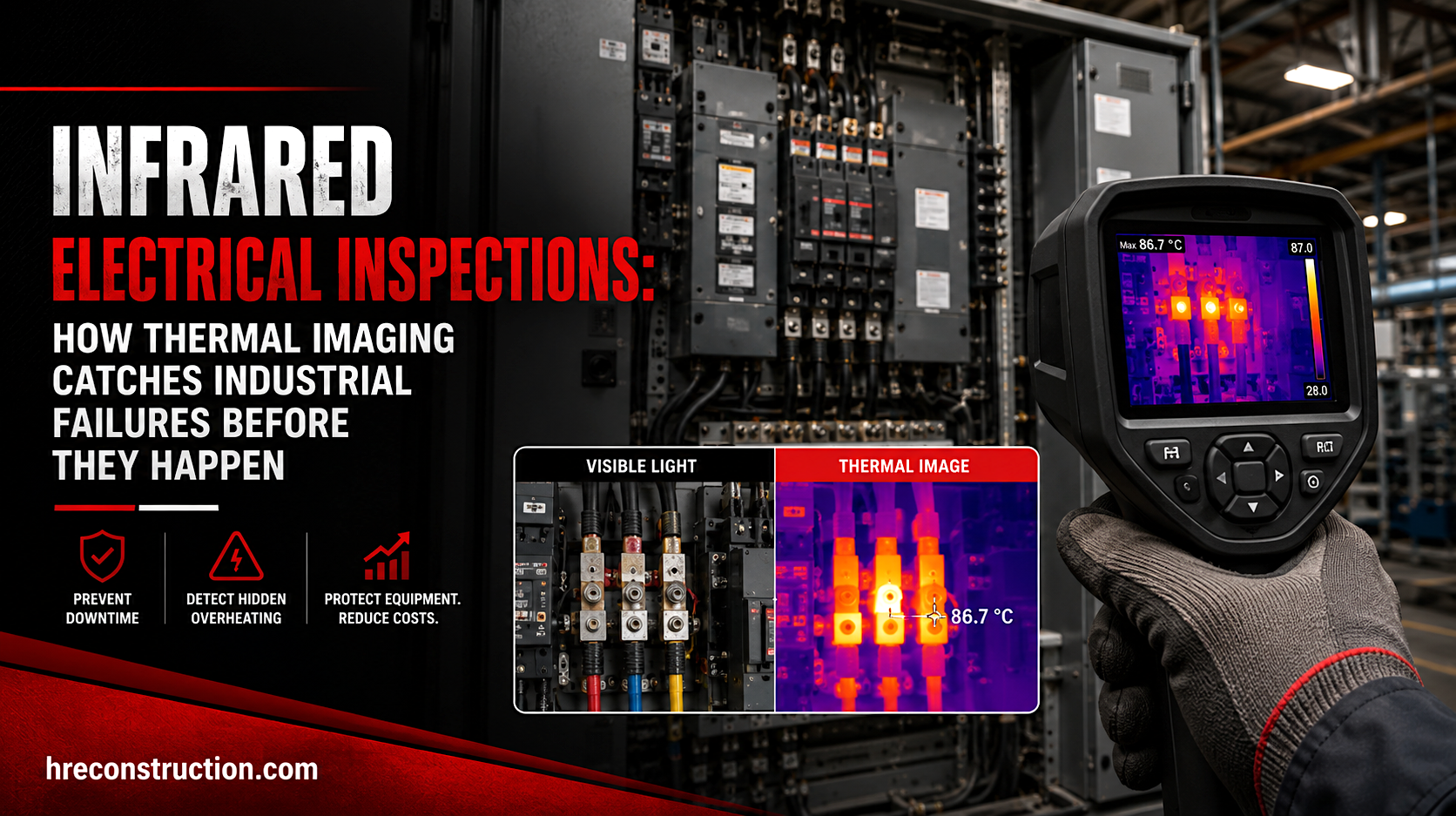
A loose connection inside a busy electrical panel does not announce itself. It does not trip a breaker or set off an alarm. It simply runs hotter than it should, day after day, until the insulation breaks down, the terminal fails, or a fire starts. By the time anyone notices, the damage is already done and the line is already down.
This is the exact problem an infrared electrical inspection is built to solve. Instead of waiting for a component to fail, thermal imaging lets you see the heat that failure produces while everything is still running. For an industrial facility, where a single unplanned outage can stall an entire operation, that early warning is the difference between a scheduled repair and an emergency.
What an Infrared Electrical Inspection Actually Does
Every energized electrical component gives off heat. When that component is healthy, the heat stays within a normal, predictable range. When something is wrong, a loose lug, an overloaded circuit, a corroded contact, an unbalanced load, the resistance climbs and the temperature rises with it.
A thermal imaging camera reads those temperature differences and turns them into a visual map. A connection that should be running cool shows up as a bright, hot signature against the rest of the panel. A trained technician interprets that image, compares phases and similar components against each other, and identifies exactly which part is heading toward failure.
The inspection is done while the equipment is energized and under normal load, so you see real operating conditions rather than a cold, powered-down snapshot. Nothing has to be shut off to find the problem.
Why Industrial Facilities Are the Strongest Candidates
Infrared inspections deliver the most value where electrical systems run hard and run constantly. Industrial facilities check every box. Equipment is heavily loaded, often runs around the clock, and a fault in one location can cascade into a much larger shutdown.
The components that benefit most from regular thermal scans include:
- Main and sub-distribution panels
- Switchgear and switchboards
- Motor control centers and starters
- Transformers and disconnects
- Breaker panels and fused disconnects
- Bus bars and electrical connections at high-load points
These are the same points where a quiet, slow-building fault can sit undetected for months. A scheduled infrared inspection brings those faults into view before they reach the point of failure.
A hot connection is not a one-time event. It gets worse every time the equipment runs, because heat damages the metal and the damage increases the resistance, which creates even more heat. Catching it early stops that cycle.
What an Infrared Inspection Can Reveal
A thorough thermal scan surfaces issues that a standard visual check will almost always miss:
- Loose or corroded connections that are quietly overheating
- Overloaded circuits carrying more current than they are rated for
- Unbalanced loads across phases that strain equipment unevenly
- Failing breakers and fuses that run hot before they fail outright
- Deteriorating insulation showing early heat signatures
- Undersized conductors for the load they are actually carrying
Each finding can be ranked by severity, which means you are not handed a vague list of concerns. You get a prioritized report that tells you what needs attention now, what should be watched, and what can wait for a planned maintenance window.
How Often Should You Schedule One
For most industrial facilities, an annual infrared inspection is a sensible baseline. Operations with heavy continuous loads, critical processes, or older electrical infrastructure often benefit from scanning twice a year. Many facilities also fold thermal imaging into a broader preventive maintenance program so the data builds over time and trends become easy to spot.
If your facility has never had a thermal scan, the first one almost always uncovers something worth fixing. After that, regular inspections protect the work you have already done and keep new problems from building up unnoticed.
How HRE Can Help
HRE Construction is an industrial electrical contractor with more than 30 years of experience keeping demanding facilities running. We perform infrared electrical inspections as part of a complete approach to industrial electrical reliability, not as a standalone box to check.
When we scan your facility, we do more than hand over images. We interpret every finding, explain what it means for your operation, and lay out a clear plan to correct anything that puts you at risk. Because we are a full-service industrial electrical contractor, we can also carry out the repairs, from tightening and replacing connections to upgrading panels, switchgear, and motor control centers. You are not left coordinating between a company that finds the problem and a separate one that fixes it.
You can learn more about our full range of industrial electrical services or read how a structured preventive maintenance program reduces downtime across an entire facility.
Schedule Your Infrared Inspection
If it has been more than a year since your last thermal scan, or if you have never had one, now is the time to find out what your electrical system is hiding. A single infrared inspection can catch a fault that would otherwise take a production line down at the worst possible moment.
Call HRE Construction at 803-262-2615 or reach out through our contact page to schedule an infrared electrical inspection for your facility. We will help you build a plan that keeps your operation running and your electrical system protected.
FAQ Section
Does an infrared inspection require shutting down our equipment? No. The inspection is performed while your equipment is energized and operating under normal load, because that is the only way to see real heat signatures. There is no need to power down or interrupt production.
How long does a thermal scan take? It depends on the size of your facility and the number of panels, switchgear, and components involved. Most inspections are completed without any disruption to your normal operations, and we schedule around your production needs.
Will I get a report I can act on? Yes. You receive a clear report with thermal images, the location of each issue, and a severity ranking so you know exactly what needs immediate attention and what can be addressed during a planned maintenance window.
How is this different from a regular electrical inspection? A standard inspection relies on visual checks and testing. Infrared imaging adds a layer that the eye cannot see, revealing overheating components and developing faults well before they show any visible sign of trouble.