Transformer Sizing and Maintenance for Industrial Facilities
July 21, 2026 | Samantha Mariano
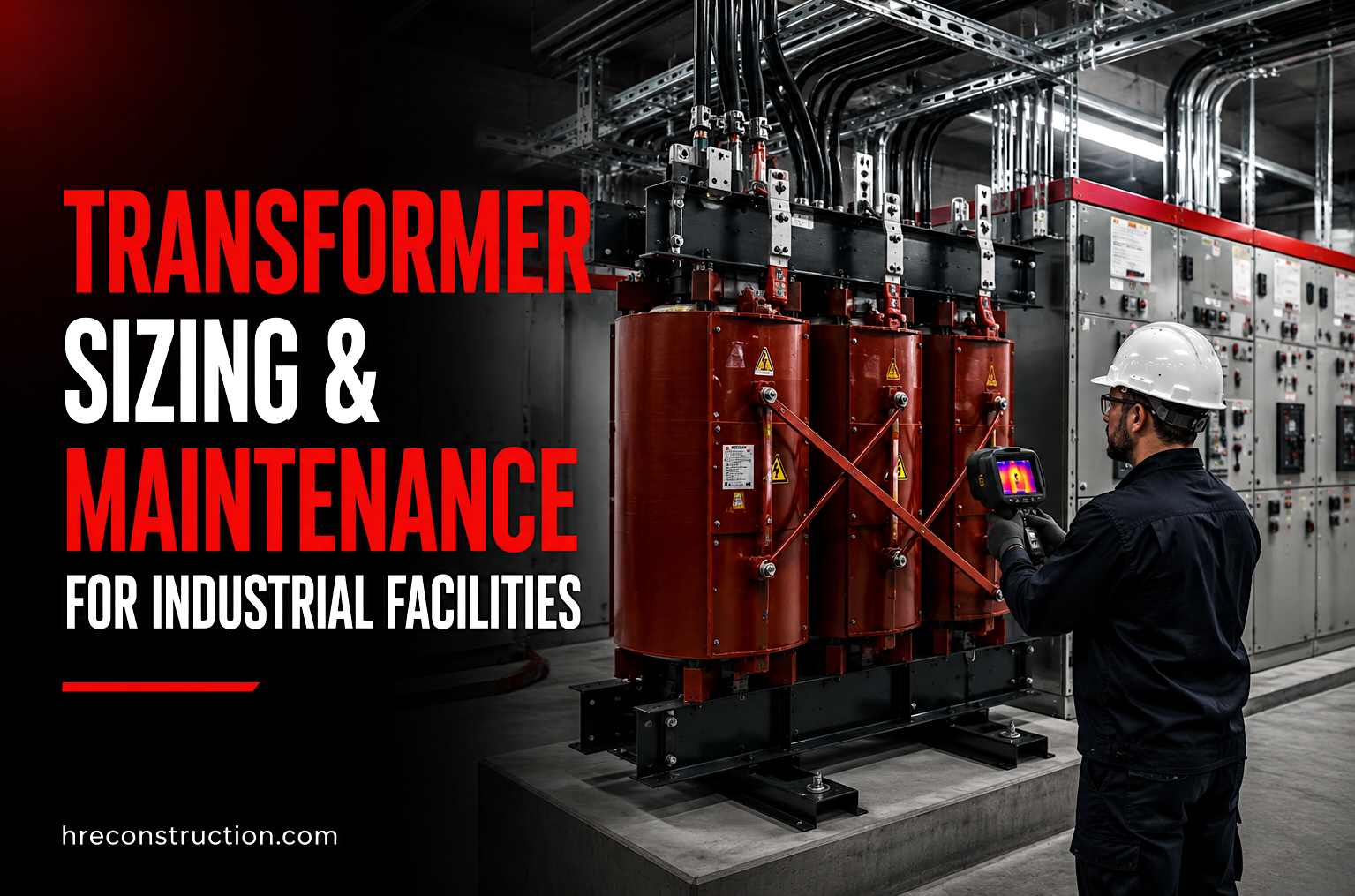
Transformer Sizing and Maintenance for Industrial Facilities
Transformers rarely fail without warning. Most breakdowns follow months, sometimes years, of small deviations that go unnoticed until a facility loses power in the middle of a production run. For industrial operations, that kind of outage does not just mean an inconvenience. It means stalled equipment, missed shipments, and in some cases, damaged product.
Getting a transformer right starts long before it is ever energized, and it does not end once it is installed. Sizing decisions made at the start of a project and the maintenance habits that follow both determine how long that transformer lasts and how reliably it performs.
Why Transformer Sizing Is About More Than Just Load
Sizing a transformer correctly means accounting for the building's actual load, not just its rated capacity today. Facilities that add equipment over time without revisiting their electrical capacity often end up running transformers closer to their thermal limits than their designers intended, which accelerates insulation aging and shortens service life.
What the NEC Requires
Article 450 of the National Electrical Code governs how transformers are protected and installed. For transformers rated 1,000V or less, Table 450.3(B) sets the overcurrent protection limits: primary-only protection is generally capped at 125% of the transformer's primary full-load current, while a combination of primary and secondary protection allows more flexibility, up to 250% on the primary side paired with 125% on the secondary. The code also requires a disconnecting means for each transformer under Section 450.14, located within sight of the unit or lockable if it is not.
These numbers are not arbitrary. They balance two competing needs: allowing enough headroom for the transformer's normal inrush current when it energizes, while still reacting fast enough to clear a genuine fault before the unit is damaged.
Common Sizing Mistakes We See in the Field
- Sizing to current load only, with no allowance for planned equipment additions
- Choosing overcurrent protection that trips on routine inrush current, leading to nuisance outages
- Overlooking the disconnect and accessibility requirements until after installation
- Mixing conductor sizing rules with transformer OCPD rules, which follow different sections of the code
Facility managers who are planning an expansion or adding significant equipment should treat transformer capacity as part of that planning conversation, not an afterthought once new machinery shows up on the floor.
What Ongoing Transformer Maintenance Should Include
NFPA 70B, the standard for electrical equipment maintenance, lays out maintenance intervals based on the condition of the equipment rather than a single fixed schedule. Well-maintained transformers in good condition may be tested on a longer interval, while units showing early signs of wear call for closer attention.
A sound maintenance program for industrial transformers typically includes:
- Insulation resistance testing, performed in line with IEEE Std 43 guidance, to track how well the winding insulation is holding up over time
- Visual and thermal inspections, using infrared imaging to spot hot spots at connections or windings before they become failures
- Oil sampling and dissolved gas analysis (DGA) for liquid-filled units, which can reveal early signs of overheating or internal arcing well before those conditions are visible from the outside
- Load and tap position checks, confirming the transformer is still operating within its intended range as facility loads change
Dry-type and liquid-filled transformers do not follow identical maintenance paths. Dry-type units rely more heavily on insulation resistance testing and thermal scans, while liquid-filled transformers add oil analysis into the mix. Knowing which type is installed, and testing it accordingly, is part of getting real value out of a maintenance program rather than just checking a box.
Signs a Transformer Needs Attention
- Rising or inconsistent insulation resistance readings between tests
- Unusual humming, buzzing, or vibration
- Discoloration, corrosion, or oil staining around the enclosure
- Breakers or fuses tripping without an obvious cause
- Warmer-than-expected readings on a thermal scan compared to prior inspections
Any of these on their own may not mean immediate failure, but they are worth documenting and tracking. Trends over multiple inspections tell a more reliable story than any single reading.
How HRE Can Help
HRE Construction works with industrial facilities to size transformers correctly from the start and to keep them running through a structured maintenance approach, not a one-time inspection. That includes reviewing existing electrical capacity against current and planned loads, verifying overcurrent protection and disconnect setups meet code, and performing the ongoing testing and inspections that catch problems while they are still manageable.
Because our focus stays on industrial facilities rather than general commercial work, our team is familiar with the load profiles, duty cycles, and expansion patterns that come with manufacturing and industrial operations specifically.
Protect Your Facility's Power Reliability
A transformer that is sized correctly and maintained consistently is one less thing standing between your facility and unplanned downtime. If it has been a while since your transformers were tested, or if you are planning equipment additions that could push your current capacity, now is a good time to have them reviewed.
Contact HRE Construction today to schedule a transformer assessment for your facility.
FAQ Section
How often should industrial transformers be tested? Testing frequency depends on the transformer's condition and criticality to operations. NFPA 70B ties maintenance intervals to equipment condition rather than a single fixed timeline, so a transformer in good condition with a clean test history may go longer between inspections than one showing early warning signs.
What is the difference between maintaining a dry-type versus an oil-filled transformer? Dry-type transformers are maintained primarily through insulation resistance testing and thermal imaging. Oil-filled transformers require those same checks plus periodic oil sampling and dissolved gas analysis, since the insulating fluid itself can reveal internal issues that aren't visible from the outside.
Do I need a licensed electrical contractor for transformer maintenance? Yes. Transformer testing and maintenance involve energized equipment and require qualified personnel following lockout/tagout procedures and NFPA 70E safety practices. This is not a task for in-house staff without the proper electrical qualifications.
What happens if a transformer is undersized for facility growth? An undersized transformer runs closer to its thermal limits more often, which accelerates insulation aging and increases the risk of nuisance trips or premature failure. It's worth reassessing transformer capacity any time a facility plans significant equipment additions.