Electrical Commissioning for Industrial Facilities: What the Process Actually Involves
August 12, 2026 | Samantha Mariano
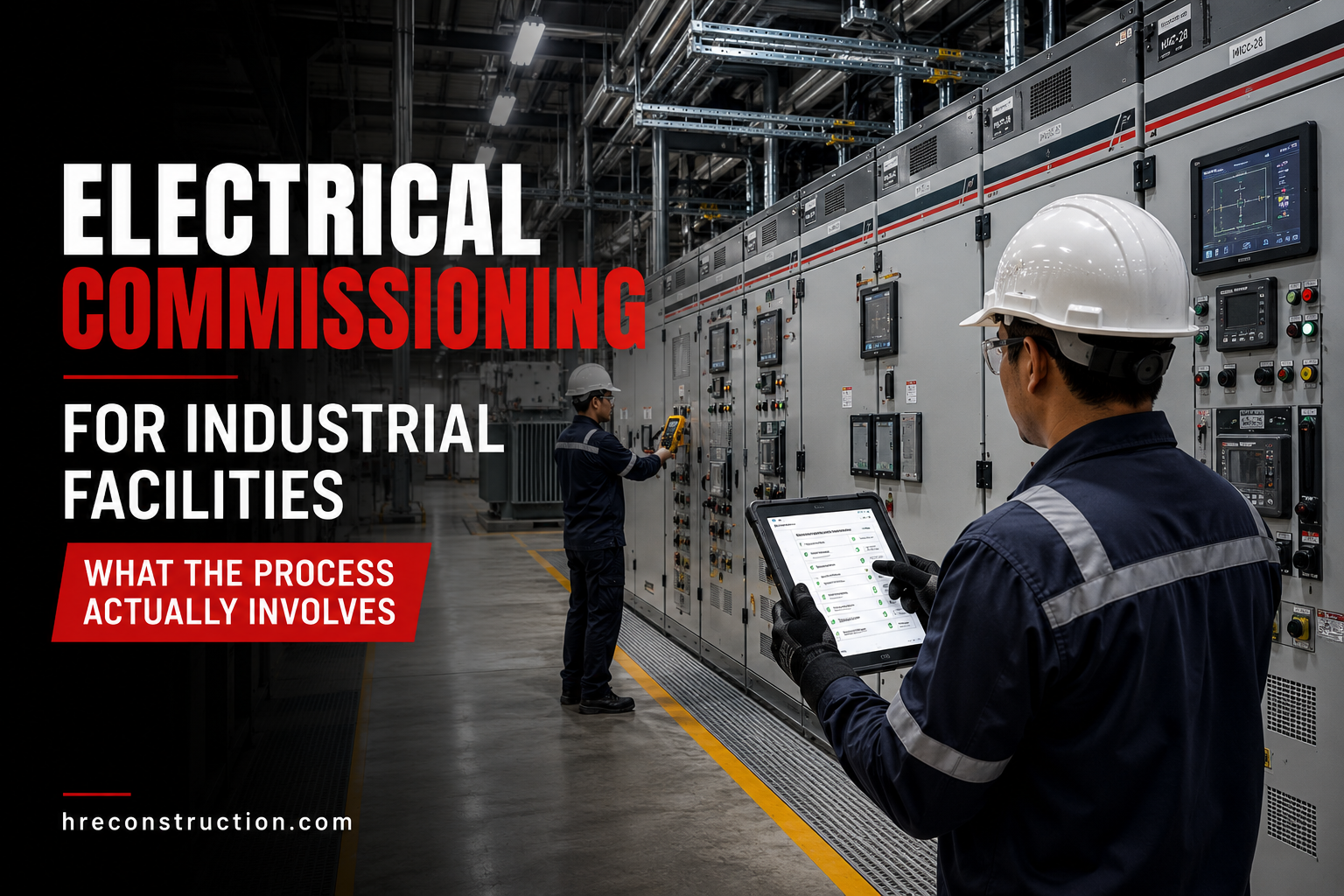
A new switchgear lineup, transformer, or motor control center can look ready to run the moment it's installed. Whether it actually is ready is a different question, and it is the one electrical commissioning is built to answer.
Commissioning is the structured process of verifying that newly installed or retrofitted electrical equipment is installed correctly, functions the way it was designed to, and is safe to place into service. For industrial facilities, skipping or rushing this step is one of the more expensive mistakes a project can make, because problems that go undetected before energization tend to surface later as downtime, equipment damage, or safety incidents.
What Electrical Commissioning Covers
Commissioning is broader than a single inspection. It typically includes several distinct phases, each documented as it happens.
Design and installation review. Before anything is energized, the commissioning process confirms that equipment was installed according to the approved design, manufacturer specifications, and applicable code requirements. This includes checking connections, clearances, labeling, and grounding.
Acceptance testing. This is where equipment gets put through a defined set of electrical tests before it is placed in service. Insulation resistance testing, contact resistance testing, protective relay testing, and circuit breaker testing are common examples. The goal is to confirm the equipment meets manufacturer tolerances and is safe to energize.
Functional performance testing. Once equipment is energized, functional testing verifies that it performs as intended under real operating conditions. For a facility with backup power, this might mean confirming that an automatic transfer switch correctly picks up load during a simulated utility outage. For switchgear, it can mean verifying protective devices trip and coordinate the way the design intended.
Documentation. Every step of the commissioning process gets recorded. This paper trail becomes the baseline for future maintenance testing and gives facility managers a clear record of how equipment performed on day one, which matters if problems show up later and someone needs to determine whether an issue is new or has been present since startup.
Why It Matters for Industrial Facilities
Industrial electrical systems tend to be more complex and higher-stakes than a typical commercial installation. A single switchgear lineup might feed multiple production lines, and a failure during startup or early operation can mean lost production time well beyond the cost of the equipment itself.
Commissioning catches problems while they are still inexpensive to fix. A loose connection found during acceptance testing is a quick correction. The same loose connection found six months later, after it has overheated and damaged a breaker, is a much larger repair with unplanned downtime attached.
There is also a maintenance benefit that often gets overlooked. The baseline data collected during commissioning becomes the reference point for every maintenance test that follows. Without it, technicians performing routine testing years later have nothing to compare their readings against, which makes it harder to catch gradual degradation before it becomes a failure.
The Standards Behind the Process
Electrical commissioning in the United States is guided primarily by standards from the InterNational Electrical Testing Association (NETA), with ANSI/NETA ECS covering the commissioning process itself and ANSI/NETA ATS covering the acceptance testing specifications that support it. NFPA 70B, the Standard for Electrical Equipment Maintenance, complements these by addressing how commissioning data feeds into an ongoing maintenance program once the facility is operational.
Together, these standards treat commissioning, acceptance testing, and long-term maintenance testing as connected stages of the same lifecycle rather than separate, unrelated tasks. A facility that only tests equipment once, at commissioning, and never again is missing the point of having a documented baseline in the first place.
How HRE Can Help
HRE Construction provides electrical commissioning and acceptance testing for industrial and instrumentation projects across our service area, including new installations, equipment upgrades, and retrofits. Our team documents every phase of the process, from installation review through functional performance testing, so your facility has a complete, code-aligned record from day one and a solid baseline for every maintenance cycle that follows.
Ready to make sure your next installation starts off right? Contact HRE Construction to schedule electrical commissioning for your facility.
Frequently Asked Questions
What is the difference between electrical commissioning and acceptance testing?
Acceptance testing is a specific set of electrical tests performed on equipment before it is energized. Commissioning is the broader process that includes acceptance testing along with installation review, functional performance testing, and documentation of the entire startup process.
When should electrical commissioning happen during a construction project?
Commissioning begins during the design and installation phases and continues through initial energization and functional testing, ideally before the facility relies on the equipment for full production.
Does electrical commissioning replace ongoing maintenance testing?
No. Commissioning establishes the baseline condition of new equipment. Ongoing preventive maintenance testing compares current equipment condition against that baseline over time to catch developing issues.
Who should perform electrical commissioning on industrial equipment?
Commissioning should be performed by qualified electrical professionals familiar with NETA standards and the specific equipment being installed, since the process involves both technical testing and detailed documentation that becomes part of the facility's permanent maintenance record.