Emergency and Standby Power Systems for Industrial Facilities
July 27, 2026 | Samantha Mariano
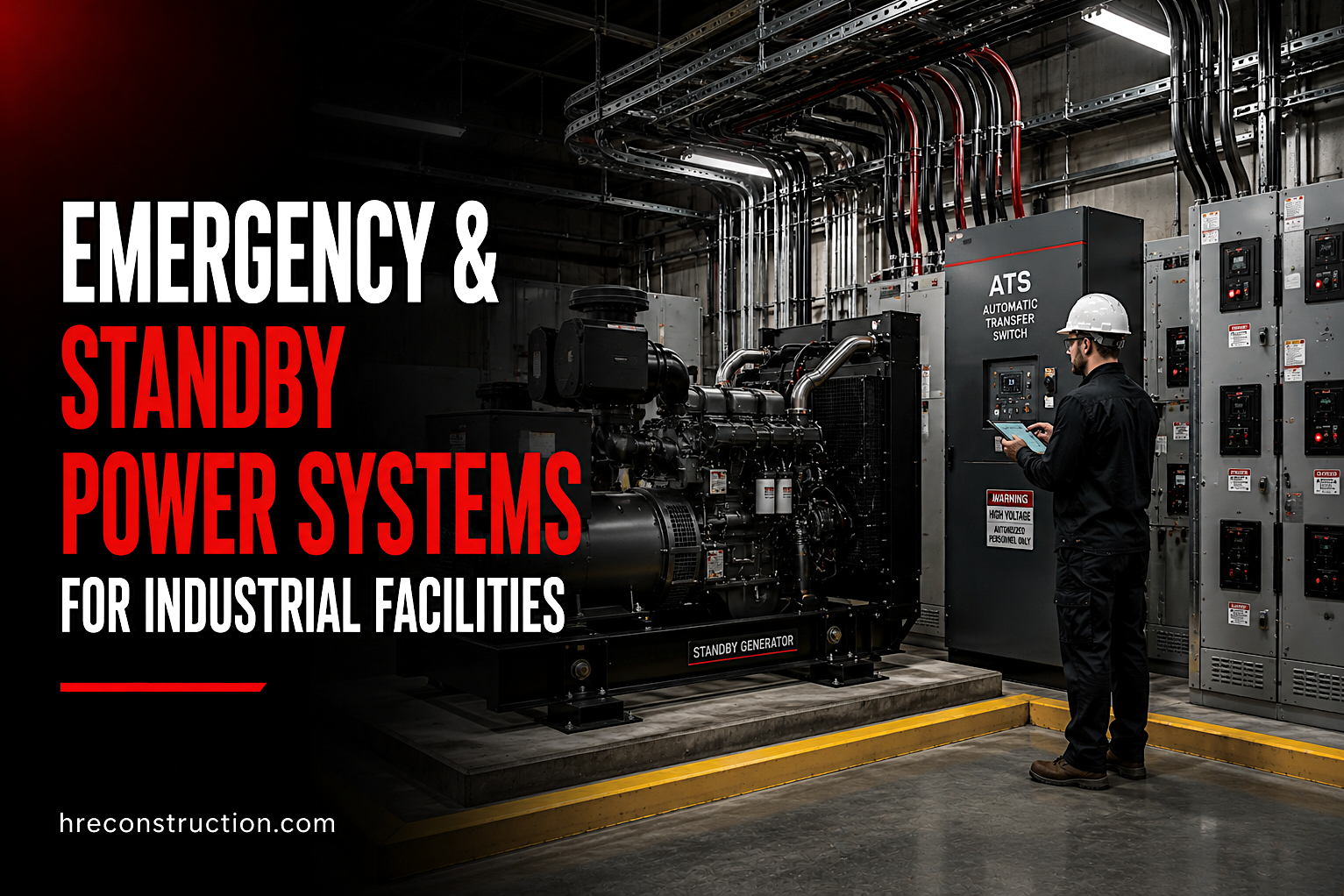
A power outage at an industrial facility rarely means just inconvenience. It can mean halted production lines, spoiled materials, tripped safety systems, or equipment damage that takes days to recover from. For facilities running continuous processes or housing safety-critical loads, having a properly designed standby power system isn't optional. It's part of how the facility stays operational and code compliant.
Here's what facility managers should understand about emergency and standby power systems, including how the National Electrical Code (NEC) classifies them and what that means for your site.
The Three Categories of Backup Power Under the NEC
The NEC splits backup power systems into three distinct categories under Chapter 7, and each one comes with its own wiring, testing, and restoration requirements.
Emergency Systems (Article 700) These supply power to loads essential for life safety, such as egress lighting, exit signs, fire alarms, and fire pumps. Power must be restored within 10 seconds of an outage, and the wiring for these circuits has to be kept completely separate from all other wiring in the facility, including separate raceways, panels, and transfer equipment.
Legally Required Standby Systems (Article 701) These systems back up loads that a code or an Authority Having Jurisdiction (AHJ) requires, but that aren't classified as life safety. In an industrial setting, this often covers things like process ventilation, sewage or wastewater handling, and heating systems tied to code requirements. Power must be restored within 60 seconds.
Optional Standby Systems (Article 702) These are backup systems the facility owner chooses to install, typically to protect production equipment, refrigeration, or data systems from the cost of downtime. The NEC doesn't set a specific restoration time for these systems, which gives more flexibility in design.
Most industrial facilities end up with a mix of these categories on one site. A single generator might serve emergency lighting circuits, legally required process equipment, and optional production loads at the same time. When that happens, the most restrictive article governs the generator itself, while each downstream circuit still has to meet the requirements of its own article. Getting this classification wrong is one of the common electrical code violations inspectors flag on industrial sites.
What NFPA 110 Adds to the Picture
While the NEC governs how these systems are wired and installed, NFPA 110 (Standard for Emergency and Standby Power Systems) governs how the overall system is classified, tested, and maintained. It defines systems by Type (how fast power is restored), Class (how long the system can run on-site fuel without refueling), and Level (roughly tied to whether the system is life-safety or legally required).
For industrial sites, this usually comes down to fuel planning and testing discipline. On-site fuel has to support the required runtime at full load, and both NEC and NFPA 110 call for documented testing on a regular schedule, not just a check at initial installation. Missing or incomplete maintenance logs are a common issue inspectors flag, so keeping that documentation current matters as much as the equipment itself. Standby power testing fits naturally into a broader electrical preventive maintenance program rather than standing alone as a separate task.
Sizing a System That Actually Covers Your Load
Undersizing a standby system is one of the more common and costly mistakes facilities run into. A generator needs to account for the full connected load across every circuit it serves, plus additional starting capacity for large motors, which can draw significantly more current at startup than during normal operation. Facilities running multiple large motors, or motors that could start simultaneously during a restart sequence, need that starting load factored in up front, not discovered the first time the system is actually tested under real conditions.
Why This Matters Beyond Compliance
Code compliance is the baseline, not the whole story. A standby power system that's correctly classified, properly wired, and routinely tested is what keeps a facility's fire alarms, egress lighting, and critical process equipment functioning when the grid doesn't cooperate. For facilities running continuous processes, it's also what stands between a brief outage and a production loss that costs far more than the system itself.
How HRE Can Help
HRE Construction designs and installs industrial standby power systems as part of our full range of electrical services, built around how your facility actually operates rather than a generic template. That includes classifying loads correctly under NEC Article 700, 701, or 702, sizing generators and transfer equipment to handle real startup demands, and keeping wiring separation and documentation in line with code. We also support ongoing testing and maintenance, so your system is ready when you actually need it, not just on paper.
If your facility doesn't have a standby power plan in place, or you're not confident your current system meets code, we can walk the site and tell you exactly where you stand.
Contact HRE Construction today to schedule a standby power assessment for your facility.
FAQ
Does every industrial facility need a standby power system?
Not every facility is required to have one by code, but any facility with life safety loads, code-mandated equipment, or processes where downtime is costly should evaluate its exposure. An electrical contractor can help determine what applies to your specific site.
How often do standby systems need to be tested?
NEC and NFPA 110 both call for regular testing and documented maintenance records, not just a one-time test at installation. Testing frequency depends on the system classification and local AHJ requirements.
Can one generator serve multiple types of loads?
Yes, but each circuit still has to meet the requirements of its own NEC article, and the generator itself is governed by the most restrictive article among the loads it serves.