Battery Energy Storage Systems (BESS) for Industrial Facilities
August 6, 2026 | Samantha Mariano
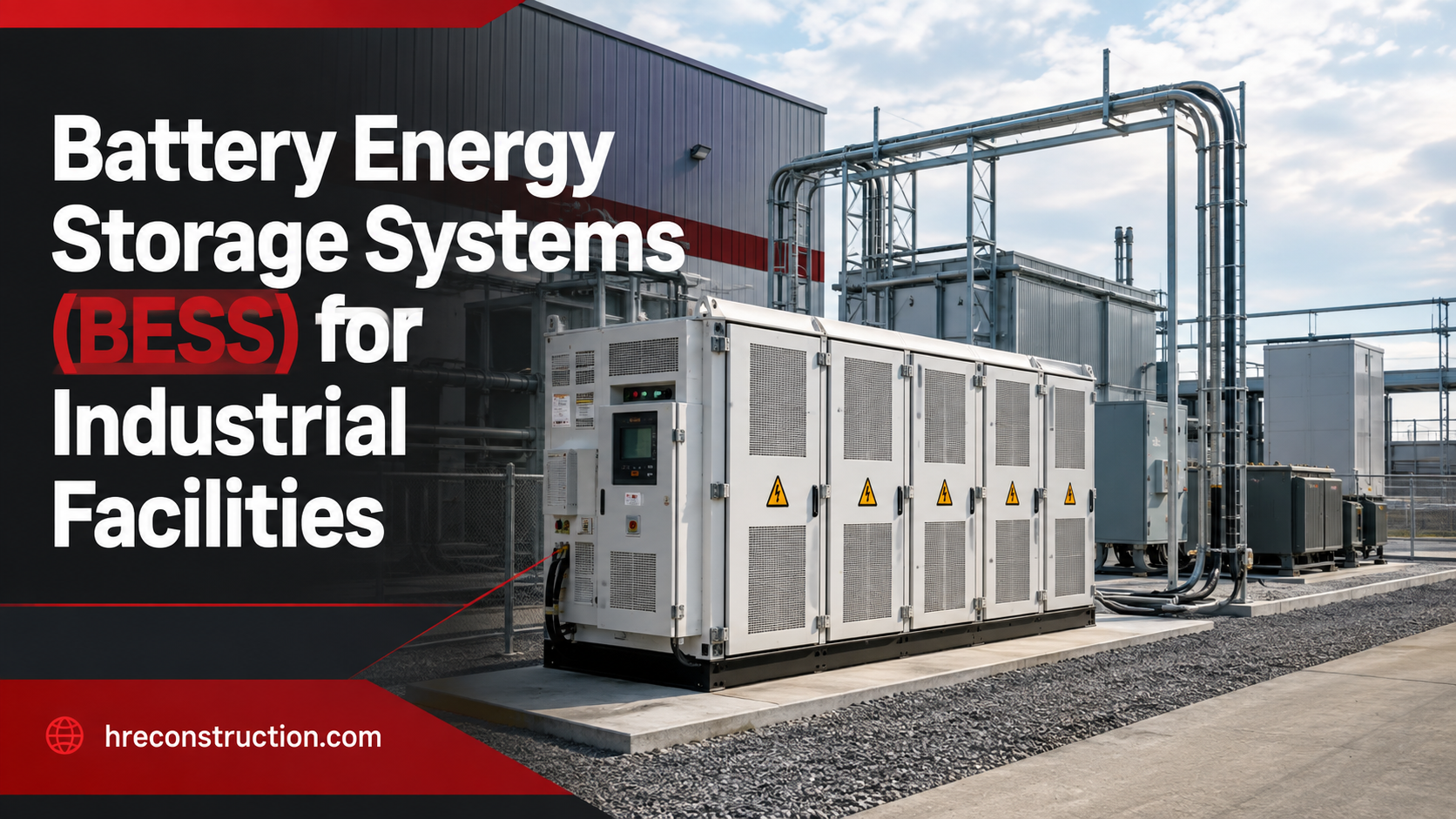
Industrial facilities have two long-standing problems that rarely get solved by the same piece of equipment: unpredictable demand charges and the risk of losing power during an outage. Battery energy storage systems, or BESS, are increasingly being installed to address both at once, storing energy when it's cheap or available and releasing it exactly when the facility needs it most.
BESS isn't a replacement for a generator, and it isn't the same thing as a UPS, even though it gets compared to both. Understanding where it fits is the first step to deciding whether it makes sense for your facility.
What a BESS Actually Does
A battery energy storage system stores electrical energy in rechargeable battery packs, typically lithium-ion, along with the power conversion equipment, controls, and monitoring systems needed to charge and discharge that energy safely. The system pulls power from the grid, from onsite generation, or both, and releases it back to the facility on a schedule or in response to a trigger like a demand spike or an outage.
This is different from a standby generator, which creates power on demand by burning fuel, and different from a UPS, which is built to bridge a very short gap (typically minutes) until backup power comes online. A BESS can do a version of both jobs, but it's most often deployed for the economic side: shifting when a facility draws power from the grid rather than only serving as a backup source.
Peak Shaving and Demand Charge Reduction
The most common reason industrial facilities install a BESS is to manage demand charges, the portion of a utility bill based on the highest sustained load during a billing period. A facility can charge its battery system during lower-demand periods and discharge it during peak load windows, shaving the top off demand spikes before they set the rate for the entire month.
This works best when a facility already has visibility into its load patterns. A power monitoring system that tracks demand in real time is what makes a BESS deployment worth the investment in the first place, since you need to know where and when your peaks actually happen before you can size a battery system to shave them.
Backup Power and Resiliency
While demand charge reduction is usually the primary driver, a properly sized BESS can also serve as a supplemental backup power source, either on its own for short-duration outages or paired with a generator for longer ones. The battery system responds fast, generally within seconds, which makes it useful for bridging the gap before a generator comes fully online.
This pairs naturally with facilities that already rely on emergency and standby power systems, since a BESS can reduce how hard a generator has to work and how often it cycles, without replacing the generator's role for extended outages.
Codes and Standards That Apply
Stationary battery energy storage systems fall under NFPA 855, the Standard for the Installation of Stationary Energy Storage Systems, which governs siting, separation distances, and fire protection requirements. Under current NFPA 855 requirements, lithium-ion battery systems above 20 kWh generally need to be certified to UL 9540, the safety standard for energy storage systems and equipment, with larger or more closely spaced installations also requiring UL 9540A fire testing.
The National Electrical Code addresses energy storage systems under Article 706, which requires listed equipment (typically UL 9540 listing) as part of installation compliance. These requirements exist because of the fire risk associated with battery thermal runaway, and they directly affect where a BESS can be located, how it's separated from other equipment, and what fire suppression or detection is required around it.
How HRE Can Help
HRE Construction works with industrial facilities to evaluate whether a battery energy storage system makes sense for their load profile, and to design and install systems that meet NFPA 855 and NEC Article 706 requirements from the start. We coordinate the electrical integration between the BESS, your existing switchgear, and any backup generation already in place, so the system works with your facility's infrastructure instead of around it.
Thinking about whether battery storage makes sense for your facility? Contact HRE Construction to talk through your options.
Frequently Asked Questions
Is a BESS a replacement for a backup generator?
Not typically. A BESS responds faster and works well for short-duration gaps or demand management, but for extended outages, most facilities still rely on a generator. The two are often paired together rather than one replacing the other.
How do we know if battery storage is worth it for our facility?
It depends heavily on your demand charge structure and how spiky your load profile is. Facilities with clear, recurring demand peaks tend to see the strongest return, which is part of why having power monitoring data in place first matters.
What size BESS do industrial facilities typically need?
Sizing depends on the specific load profile, demand charge structure, and whether the system is intended for peak shaving, backup power, or both. There isn't a one-size answer, which is why an assessment of actual usage data comes before any equipment sizing decision.
Does installing a BESS affect our fire code compliance?
Yes. Battery energy storage systems are subject to NFPA 855 and related fire code requirements around siting, separation, and suppression, so those requirements need to be factored into the installation plan from the beginning rather than addressed after the fact.