Switchgear Maintenance and Testing: What Industrial Facilities Need to Know
July 30, 2026 | Samantha Mariano
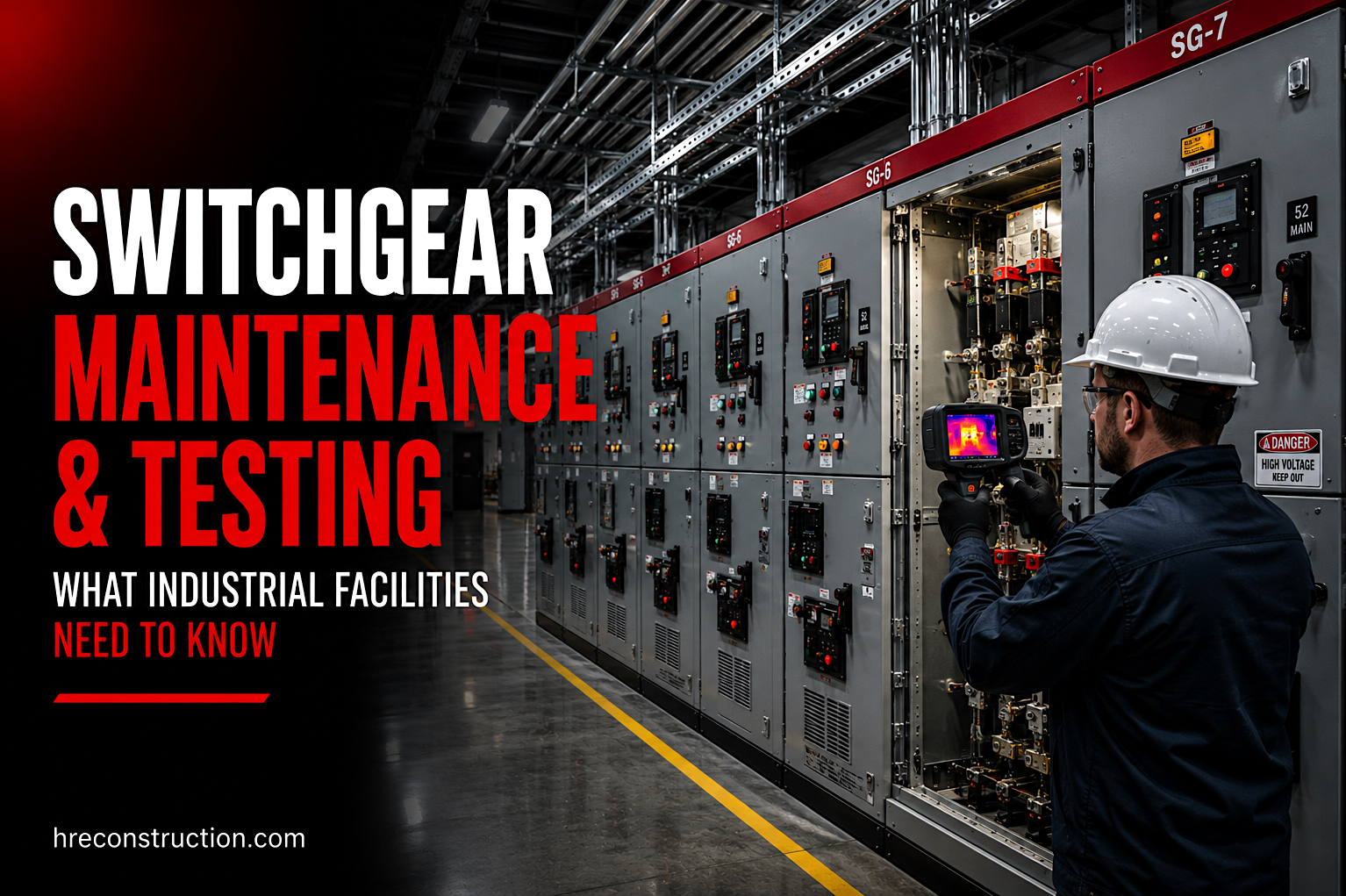
Switchgear sits at the center of an industrial facility's power distribution system, controlling, protecting, and isolating equipment throughout the plant. When it's working properly, most people never think about it. When it isn't, the consequences show up fast, whether that's an unplanned trip, a failed piece of downstream equipment, or in the worst cases, an arc flash event. Regular maintenance and testing is what keeps switchgear reliable over the years it's expected to serve a facility, and it's governed by standards that go well beyond a quick visual once-over.
What Counts as Switchgear
Switchgear is a broad category that covers the assemblies used to control, protect, and isolate electrical equipment, including circuit breakers, switches, fuses, and the metal enclosures that house them. Depending on voltage class and construction, this can include metal-clad switchgear, metal-enclosed low-voltage power circuit-breaker switchgear, and metal-enclosed interrupter switchgear, each governed by its own IEEE construction standard (IEEE C37.20.2 for metal-clad, C37.20.1 for low-voltage power circuit-breaker assemblies, and C37.20.3 for metal-enclosed interrupter switchgear). In an industrial setting, switchgear typically sits between the utility service entrance or a facility's main transformer and the downstream distribution equipment, including motor control centers, that actually power production equipment.
The Standards Behind Switchgear Testing
Switchgear testing in North America is primarily governed by two related standards published through NETA, the InterNational Electrical Testing Association, and recognized by ANSI.
ANSI/NETA ATS, the Acceptance Testing Specifications, applies to newly installed or retrofitted equipment. It defines the process for confirming that switchgear is properly wired, configured, and functioning correctly before it's ever energized.
ANSI/NETA MTS, the Maintenance Testing Specifications, applies to equipment already in service. It defines the field tests and inspections used to evaluate service-aged switchgear, including insulation resistance testing, dielectric withstand testing, and connection tightness checks using a calibrated torque wrench. The current edition also requires that test instruments be calibrated within 12 months of the date of test, and that a test decal be affixed to the equipment recording what was done and when.
These standards work alongside NFPA 70E, which governs the safety practices and PPE requirements for anyone working on or near energized switchgear, and NFPA 70B, which lays out the broader preventive maintenance framework for electrical equipment in industrial and institutional facilities.
Why Testing Frequency Matters
Switchgear doesn't fail all at once. Insulation degrades gradually from age, moisture, and thermal cycling. Connections loosen over years of vibration and load cycling. Contacts on breakers wear from repeated operation. None of this is usually visible from the outside, which is exactly why NETA-based testing relies on measured values, insulation resistance readings, contact resistance, dielectric withstand results, rather than a visual inspection alone.
A facility that only reacts when something trips has already accepted the most expensive and disruptive way to find a problem. A structured maintenance testing program, scheduled around planned outages rather than emergencies, catches degrading insulation and loosening connections while they're still a five-minute fix instead of a multi-day repair.
What a Switchgear Maintenance Visit Typically Includes
- Visual and mechanical inspection of the assembly, verifying wiring connections are tight and secure
- Insulation resistance testing to check for degraded insulation
- Contact resistance and dielectric withstand testing on breakers and switches
- Torque verification on bus and cable connections
- Functional testing of protective relays and trip mechanisms
- Documentation of results against ANSI/NETA MTS test values, with a test decal recording the date and findings
This kind of testing also feeds directly into a facility's selective coordination strategy, since protective devices that aren't performing to their rated values can throw off the coordination study that's supposed to keep a single fault from taking down more of the system than necessary.
Signs Your Switchgear May Need Attention
- Breakers that feel stiff, slow, or inconsistent when operated
- Visible discoloration, corrosion, or heat staining on bus work or connections
- Unusual humming, buzzing, or odor from the enclosure
- Documentation that's missing, out of date, or doesn't reflect the equipment's actual age and duty cycle
- A facility expansion or added load since the last acceptance or maintenance test
If any of these sound familiar, it's worth having a qualified electrical contractor evaluate the equipment before the next scheduled outage window rather than waiting for a failure to force the issue.
How HRE Can Help
HRE Construction performs switchgear maintenance, testing, and installation for manufacturing plants, processing facilities, and industrial operations across our licensed states. Our teams work from ANSI/NETA MTS and ATS testing values, document every visit, and coordinate testing windows around your facility's planned downtime rather than disrupting production. Whether you need a first-time acceptance test on newly installed equipment or a maintenance testing program for switchgear that's been in service for years, we bring the same documentation and testing rigor to every job, including work that touches PLCs and process instrumentation tied into the same power distribution system.
Ready to schedule a switchgear inspection or maintenance testing program? Request a quote from HRE Construction today.
Frequently Asked Questions
How often should industrial switchgear be tested? Testing frequency depends on the equipment's age, duty cycle, and operating environment, but most industrial facilities benefit from a maintenance testing program on a regular cycle, with additional testing after any significant load change, facility expansion, or event that may have stressed the equipment.
What's the difference between acceptance testing and maintenance testing? Acceptance testing (ANSI/NETA ATS) applies to new or retrofitted equipment before it's energized, confirming it was installed and wired correctly. Maintenance testing (ANSI/NETA MTS) applies to equipment already in service, evaluating how it has held up over time.
Can switchgear testing be done without shutting down the whole facility? Some visual and infrared inspection work can be done on energized equipment by qualified personnel following NFPA 70E safety practices. Full testing, including insulation resistance and dielectric withstand testing, typically requires the equipment to be de-energized, which is why scheduling around planned outage windows matters.
What happens if switchgear testing turns up a problem? Findings are documented against the standard's test values, and any readings outside acceptable ranges are flagged for repair, replacement, or closer monitoring before they progress into a failure.