What Is an Electrical Overload? Causes and Fixes
March 19, 2026 | Samantha Mariano
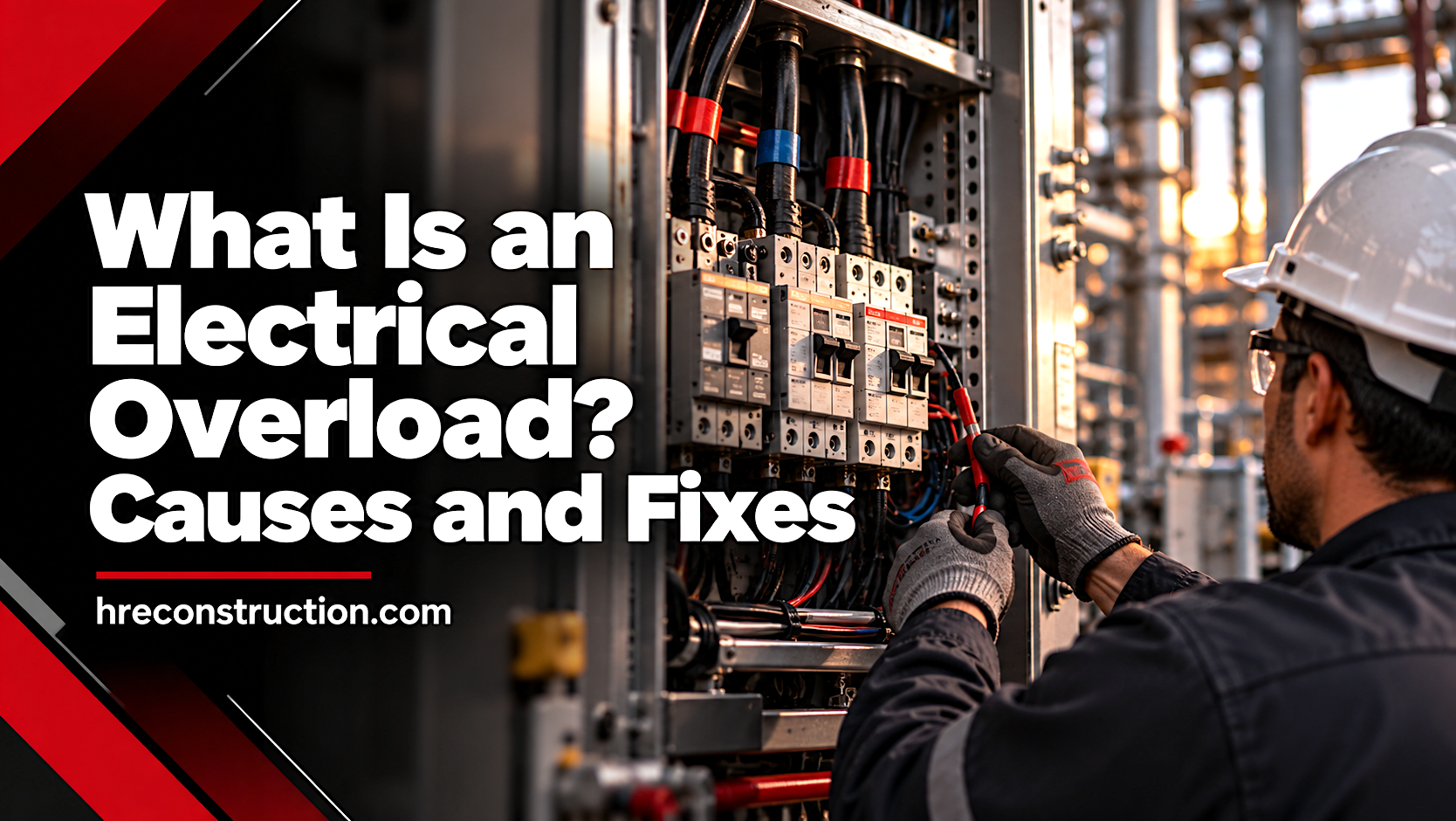
An electrical overload happens when a circuit, conductor, or piece of equipment carries more current than it's rated to handle for longer than it's designed to. The extra current turns into heat, and that heat is what damages insulation, trips breakers, and in the worst cases starts fires.
In an industrial facility, overloads rarely come from one big mistake. They build up over time as equipment gets added, production schedules change, and the electrical system stays the same size it was the day it was installed.
Overload vs. Short Circuit vs. Ground Fault
These three get lumped together because they can all trip a breaker, but they're different problems with different fixes.
- Overload: Current is higher than the circuit's rating, but it's still flowing along the normal path. Think 25 amps on a 20-amp circuit. It builds heat gradually.
- Short circuit: Current takes an unintended low-resistance path between conductors. The current spikes to many times the normal level almost instantly.
- Ground fault: Current leaks from a conductor to ground, through equipment frames, conduit, or in the worst case a person.
That difference is built into how a standard thermal-magnetic breaker works. The thermal element responds to overloads on a time delay, so a small overload can run for a while before tripping, while a big one trips faster. The magnetic element reacts almost instantly to the huge current of a short circuit. If you want to dig into what each type of trip is telling you, our post on why industrial equipment keeps tripping breakers walks through it.
What Causes Electrical Overloads in Industrial Facilities
1. Equipment added without a load review
This is the most common cause we see. A new machine, compressor, welder, or HVAC unit gets connected to an existing panel because there's an open breaker space. The panel had room for the breaker, but the feeder and the service may not have room for the load. A proper load calculation before adding equipment catches this on paper instead of on the production floor.
2. Continuous loads that weren't sized as continuous
The NEC defines a continuous load as one where maximum current is expected to run for three hours or more. Under NEC 210.20(A), the overcurrent device for a continuous load generally has to be sized at 125 percent of that load. A circuit that was fine on a single shift can become overloaded when the same equipment starts running around the clock.
3. Motors working harder than they should
Motors are the biggest loads in most plants, and several things can push their current above nameplate:
- A mechanical problem like a failing bearing, misalignment, or a jammed conveyor
- A process change that asks the motor to move more than it was sized for
- Low voltage, which makes an induction motor draw more current to deliver the same work
- Voltage imbalance between phases, where a small voltage imbalance can cause a current imbalance several times larger and overheat the windings
This is why motors have their own overload protection, separate from the branch circuit breaker. NEC 430.32 generally sets motor overload protection at 115 to 125 percent of nameplate full-load current, depending on the motor's service factor and temperature rise.
4. Harmonics from nonlinear loads
Variable frequency drives, LED lighting, UPS systems, and other electronic loads draw current in pulses instead of a smooth wave. Those harmonic currents add heat that a basic amp reading may not fully show, and they can overload neutral conductors and transformers that look fine on paper. Our post on harmonic distortion covers how that happens.
5. Heat and conductor conditions
A conductor's ampacity drops as the surrounding temperature rises and when several current-carrying conductors are bundled together. Wiring that's properly sized in a cool room can be effectively overloaded in a hot mezzanine, near a furnace, or in a packed conduit. The NEC's ampacity correction and adjustment rules exist for exactly this reason.
6. Aging infrastructure that never grew with the plant
Many facilities are still running on service and distribution equipment sized for a production line that no longer exists. Every expansion adds load, and eventually the original design margin is gone. Our guide to electrical capacity planning covers how to plan around this.
When It Looks Like an Overload but Isn't
Not every hot breaker or nuisance trip is an overload. A loose or corroded connection creates resistance, and resistance creates heat right at that one spot, even when the total current on the circuit is normal. A worn breaker can also trip below its rating. That's why measuring the actual current matters before anyone upsizes a breaker. Putting a bigger breaker on a circuit that's tripping can remove the protection that was doing its job.
For the physical warning signs like heat, discoloration, and flickering, see signs your industrial electrical system is overloaded.
How to Find and Fix an Overload
- Measure, don't guess. Take current readings under real operating conditions, ideally during peak production, and compare them to conductor ampacity and breaker ratings.
- Scan for heat. An infrared inspection shows which connections, breakers, and conductors are running hotter than they should.
- Log the load over time. A short-term load study or permanent power monitoring shows when peaks happen and what's driving them.
- Rebalance before you rebuild. Sometimes moving loads between circuits or phases solves the problem without new equipment.
- Upgrade where the capacity really isn't there. If the numbers show the feeder, panel, or service is out of room, a properly engineered panel upgrade or new feeder is the permanent fix.
- Fix the motor, not just the circuit. If a motor is drawing high current because of a mechanical or voltage problem, a bigger breaker just hides it until the motor fails.
How HRE Can Help
HRE Construction works with manufacturing and industrial facilities across South Carolina and the 10 other states where we're licensed to track down overloads and fix them for good. That includes:
- Load studies and current measurements under real operating conditions
- Infrared scanning of panels, switchgear, and motor control centers
- Load calculations before new equipment is added
- Rebalancing circuits and phases
- Panel, feeder, and service upgrades when the capacity isn't there
- Motor circuit troubleshooting, including overload relay settings and voltage issues
We'll show you what's actually driving the problem before recommending any upgrade.
Get a Second Look Before the Next Trip
If breakers keep tripping, panels are running warm, or you're about to add equipment to a system that's already near its limit, it's worth checking the numbers first. Contact HRE Construction to schedule a load assessment or request a quote.
Frequently Asked Questions
What is an electrical overload in simple terms? It's when more current flows through a circuit than it's designed to carry. The wire and equipment heat up, and if it goes on long enough, the breaker trips or the insulation gets damaged.
What is the difference between an overload and a short circuit? An overload is too much current on the normal path, and it builds heat gradually. A short circuit is current taking an unintended path, and it spikes to very high levels almost instantly. Breakers handle them with different trip elements.
Can I just install a bigger breaker if one keeps tripping? No. The breaker is sized to protect the wire. A bigger breaker on the same wire lets the wire overheat before anything trips. The fix is to find out why the current is high and either reduce the load or upgrade the circuit properly.
How do I know if my facility needs more electrical capacity? A load study or load calculation compares your actual and planned demand to what your service, feeders, and panels can carry. If you're planning an expansion or new equipment, it's best to do this before the equipment arrives.