Is Your Heat Trace Ready for the First Freeze?
October 7, 2026 | Samantha Mariano
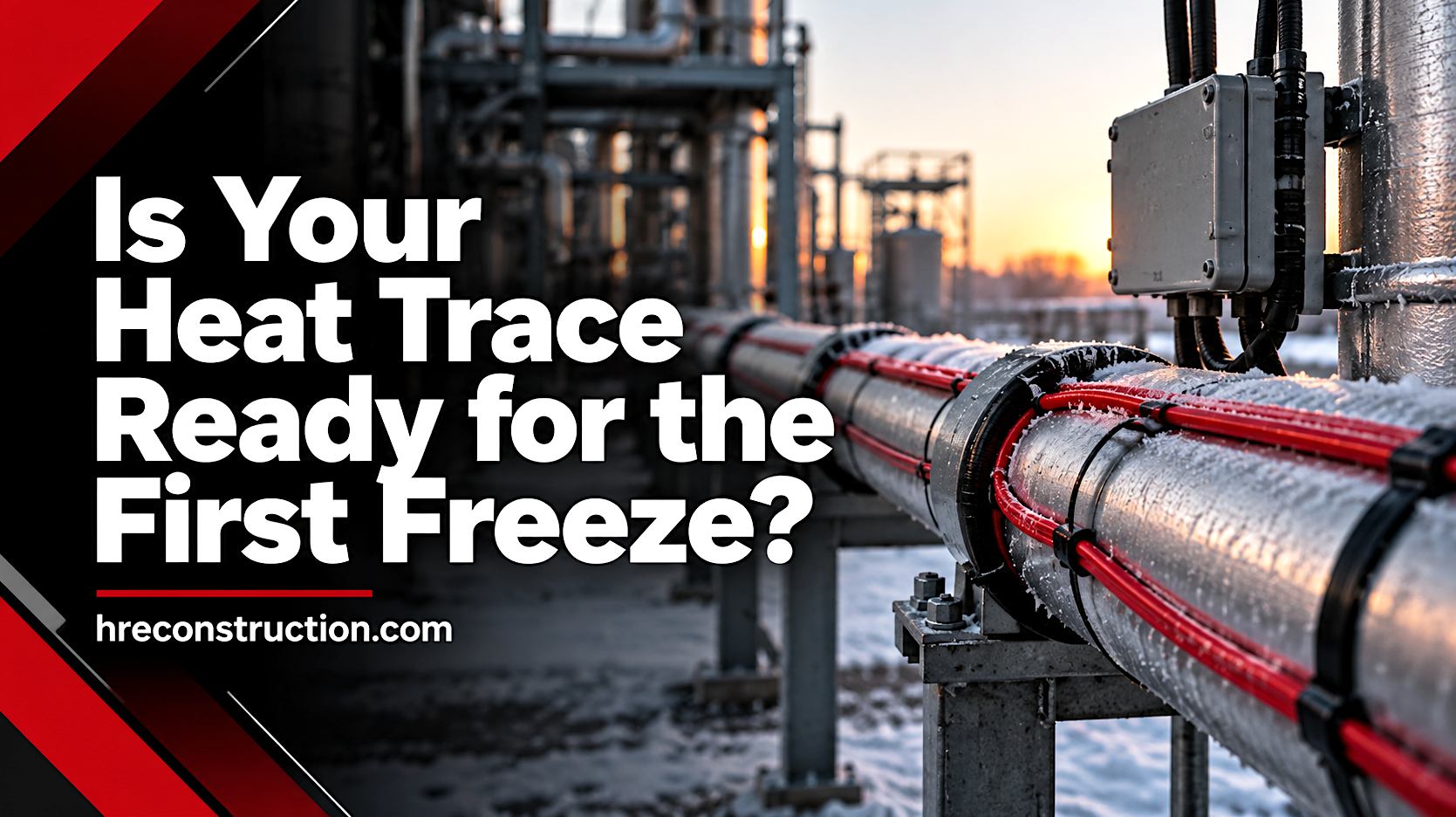
Ask a plant manager in South Carolina about winter and you'll usually get a shrug. Most days stay mild, and the heavy cold-weather planning seems like something for plants in Ohio or West Virginia.
Then a cold snap rolls through overnight, a water line or an instrument impulse line freezes solid, and a process that ran fine all fall is suddenly down. Winter Storm Elliott in December 2022 and the January 2025 Gulf Coast snowstorm both caught Southern facilities off guard for exactly this reason. The cold didn't last long. It didn't need to.
That's where electric heat tracing earns its keep, and it's also why heat trace maintenance gets skipped. The system sits idle for eight or nine months, nobody thinks about it, and the first real test of the season is the night it actually matters.
Why This Winter Deserves a Closer Look
NOAA's seasonal outlook for December through February is being shaped by a strong El Niño. For the Southeast, that tilts toward a warmer than normal winter with noticeably more rain than usual.
A warmer outlook can make freeze protection feel like a low priority. It shouldn't. Seasonal outlooks describe averages, not individual nights, and a mild winter can still deliver a few hard freezes. The wetter part of the forecast is the bigger concern for heat tracing, because water is the thing that quietly defeats it. More on that below.
What Heat Tracing Actually Does
Electric heat tracing replaces the heat a pipe, vessel, or tube loses through its thermal insulation. In industrial plants it typically protects:
- Process and utility water lines, fire water, and safety showers that sit still overnight
- Instrument impulse lines and tubing that feed pressure, level, and flow transmitters
- Chemical and process lines that need to stay above a set temperature to keep flowing
- Pump casings, valves, and tank nozzles exposed to the weather
Most modern systems use self-regulating cable, which adjusts its output as the pipe temperature changes, along with a controller, a distribution panel, and ground-fault protection. Older installations may still run constant-wattage or mineral-insulated (MI) cable. Each type has its own testing and maintenance requirements, so the manufacturer's installation and maintenance manual is always the starting point.
The Code Side: Ground-Fault Protection Is Not Optional
Heat tracing on pipelines and vessels falls under NEC Article 427. A few requirements come up again and again on pre-winter checks:
- Ground-fault protection of equipment (GFPE). NEC Section 427.22 requires ground-fault protection of equipment for electric heat tracing and heating panels. Most manufacturers specify a trip level of 30 mA, well below what a standard breaker would ever see. There is a narrow exception for industrial facilities where only qualified persons service the system and continued operation is necessary for safety. In that case, ground-fault detection with alarm indication is required instead.
- Continuous load. The NEC treats this heating equipment as a continuous load, which affects how branch circuits and overcurrent devices are sized.
- Deicing and snow melting. Outdoor deicing and snow-melting systems fall under Article 426, which has its own ground-fault protection requirement.
On the design and testing side, IEEE 515 has long been the reference standard for industrial trace heating and is now being carried forward by the joint IEC/IEEE 62395 series. Heat tracing in hazardous areas brings additional requirements, including temperature limits tied to the classified location. If your plant has classified areas, our post on NEC Article 500 compliance covers the basics.
Where Heat Tracing Fails
In our experience, heat trace rarely fails because the cable simply wears out. It fails because something around it changed.
Wet or damaged insulation. This is the big one. Heat tracing is designed to make up for a specific amount of heat loss through dry insulation. When insulation gets soaked through a torn jacket, a missing end cap, or an unsealed penetration, heat loss goes way up and the cable can't keep up. Manufacturers are blunt about it: wet insulation can make heat tracing ineffective. With a wetter winter forecast, damaged jacketing deserves extra attention this year.
Ground faults from moisture at terminations. Junction boxes, splices, and end seals that weren't sealed properly let water in. That shows up first as nuisance GFPE trips and eventually as a dead circuit.
Controllers that were bypassed or forced on. Circuits get switched to "on" during troubleshooting and stay that way, or a sensor gets disconnected and the controller defaults to heating constantly. That wastes energy all year and hides real problems.
Tripped breakers nobody noticed. A GFPE breaker that tripped last March can sit tripped all summer. If no alarm reaches anyone, the first sign of trouble is a frozen line.
Physical damage. Scaffolding, new piping, and maintenance work can crush or cut cable that was fine last winter.
A Practical Pre-Winter Heat Trace Checklist
Start these checks four to six weeks before the first forecast freeze. That leaves time to order parts and repair insulation without rushing.
- Pull the circuit list and drawings. Confirm every circuit is accounted for, labeled, and matches what's actually in the field. Changes made during the year often never make it onto the drawings.
- Walk the insulation. Look for torn or missing jacketing, crushed insulation, open end caps, and unsealed penetrations at valves and supports. Replace anything wet. Tracing can't dry out soaked insulation on its own.
- Inspect junction boxes and terminations. Check for moisture, corrosion, loose glands, and damaged seals.
- Run insulation resistance tests on every circuit. Typical guidance calls for testing polymer-insulated cable at 2,500 Vdc and MI cable at 1,000 Vdc, with the controller bypassed. Acceptance values differ by manufacturer, so use the numbers in your product manual. Record the results. A circuit trending down from last year is telling you something even if it still passes. Our post on insulation resistance testing explains why the trend matters more than any single reading.
- Test every GFPE breaker or ground-fault monitor according to the manufacturer's instructions, and confirm alarms actually reach someone who will act on them.
- Check controllers and setpoints. Verify sensors are connected and reading correctly, setpoints match the design, and no circuit is stuck in forced-on mode.
- Energize and measure. Once circuits pass, power them up and check current draw against design values. Keep in mind that self-regulating cable draws more current when it starts cold, which is why breaker sizing follows the manufacturer's start-up temperature data.
- Document everything. Test results, repairs, and as-found conditions belong in your electrical maintenance records. With NFPA 70B now a mandatory standard, a documented maintenance program carries more weight than it used to.
Don't Forget the Instrument Lines
Instrument tubing is one of the most overlooked freeze points in a plant. Impulse lines are small, they hold still fluid, and they lose heat fast. When one freezes, the transmitter doesn't always fail outright. It can send a reading that looks reasonable but is wrong, and the control system acts on it.
Heat-traced instrument enclosures and tubing bundles should be on the same pre-winter checklist as process piping. If you've been chasing odd readings every winter, frozen or partially frozen impulse lines may be part of the story, alongside the causes we covered in why transmitters drift out of calibration.
Heat Trace Is One Piece of Winter Readiness
Freeze protection only works if the power stays on. Heat tracing circuits are often not on backup power, which means a utility outage during a cold snap can take out freeze protection at the worst possible moment. It's worth checking which heat trace circuits are critical enough to justify a generator or standby feed. We covered the grid side of winter planning in Winter Grid Reliability: Is Your Facility at Risk?
How HRE Can Help
HRE Construction installs, tests, and maintains electrical and instrumentation systems for industrial facilities across South Carolina and the 10 other states where we're licensed. For heat tracing, that includes:
- Pre-winter circuit walkdowns and insulation resistance testing with documented results
- GFPE breaker and ground-fault monitor testing
- Troubleshooting nuisance trips, dead circuits, and failed controllers
- Repairs and new heat trace circuits for added piping, equipment, or instrument lines
- Panel, branch circuit, and controls work tied to heat tracing systems
- Instrument tubing and transmitter checks through our instrumentation services, plus startup support through our testing and startup services
We'll tell you what we find, what needs attention before the first freeze, and what can wait.
Get Ahead of the First Cold Snap
The best time to find a bad heat trace circuit is on a mild October afternoon, not at 3 a.m. during the first hard freeze of the year. If your plant's heat tracing hasn't been tested since last winter, or you're not sure it ever was, now is the time.
Contact HRE Construction to schedule a pre-winter heat trace inspection or request a quote.
Frequently Asked Questions
How often should industrial heat tracing be tested? At minimum, once a year before the cold season, plus any time a circuit trips, gets damaged, or is disturbed by maintenance work. Critical circuits often get additional checks during the winter. Your manufacturer's maintenance manual and your plant's maintenance program should set the exact interval.
Does the NEC require ground-fault protection for heat trace? Yes. NEC Section 427.22 requires ground-fault protection of equipment for electric heat tracing on pipelines and vessels. A limited exception allows ground-fault detection with alarm indication instead, but only in industrial facilities where qualified persons service the system and continued operation is necessary for safety.
Why does my heat trace breaker keep tripping? Repeated GFPE trips usually point to moisture or damage somewhere in the circuit, often at a junction box, splice, or end seal. Damaged cable and wet insulation are other common causes. Resetting the breaker over and over isn't a fix. The circuit should be tested and the fault located.
Do facilities in the Southeast really need heat tracing? Many do. Southern winters are mild on average, but short, hard freezes still happen, and lines that sit still overnight, along with small instrument tubing, can freeze quickly. Plants that went through recent winter storms often found out the hard way which lines needed protection.