Winter Grid Reliability: Is Your Facility at Risk?
September 17, 2026 | Samantha Mariano
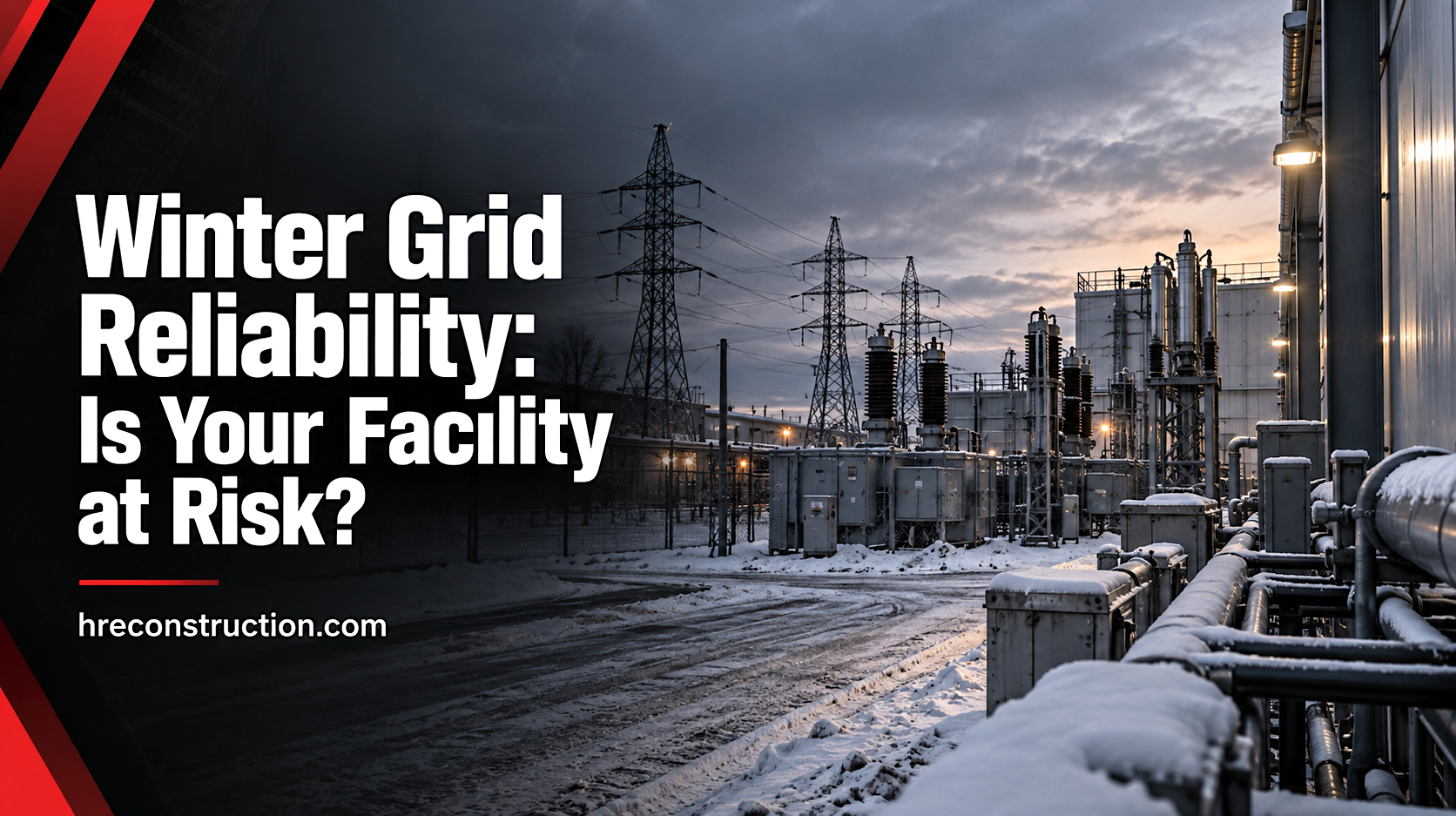
Most facility managers think of hurricane season as the outage risk to plan around. Winter deserves the same attention this year. NERC's most recent Winter Reliability Assessment flags a real, region-specific risk for the Southeast, and it is not a one-off warning. It reflects a trend that has been building for several years.
What NERC Actually Found
NERC's 2025-2026 Winter Reliability Assessment found that electricity demand across its assessment areas rose by roughly 20 gigawatts since the previous winter, a 2.5 percent jump, while new generating capacity additions only totaled about 9.4 gigawatts over the same period. Demand is outpacing supply growth, and NERC has pointed to data center and AI-driven load growth as a major contributor to that trend continuing into 2027 and beyond.
SERC, the regional reliability organization that covers South Carolina along with North Carolina, Georgia, and much of the broader Southeast, ran its own more detailed winter assessment on top of NERC's national one. It found that the SERC-East and SERC-Central subregions are both at elevated risk this winter. In NERC's classification system, elevated risk means a subregion can still meet normal peak demand, but its reserve margin, the buffer between available generation and expected demand, has fallen below the 15 percent target. If a severe, multi-day cold snap hits a wide area at once, similar to Winter Storm Elliott in 2022 or the 2021 Texas freeze, utilities may need to call on emergency operating procedures, including asking large customers to cut load voluntarily or, in a worst case, rotating outages.
What Elevated Risk Does Not Mean
Elevated risk is not a forecast that the power will go out. Under normal winter conditions, SERC's own numbers show adequate resources. The risk shows up specifically during extreme, sustained cold across a wide geographic area, the kind of event where natural gas supply, generation availability, and demand all get stressed at the same time. For most winters, that scenario does not happen. The problem is that when it does happen, the region's margin for absorbing it is thinner than it used to be, and that margin has been shrinking for a few years running.
What This Means for Industrial Facilities
For a facility with continuous processes, sensitive equipment, or safety-critical loads, a thin regional margin is worth planning around even if the odds of a severe event are modest. A few areas worth a real look before winter sets in.
Backup power readiness. If your facility already has an emergency or standby power system, this is the season to confirm it is actually ready, not just installed. That means load bank testing under NFPA 110, verified transfer switch operation, and fuel supply checked, not assumed. If your facility does not yet have standby power for its critical loads, this is a reasonable time to evaluate what that would take.
Cold-weather equipment behavior. Batteries used in UPS systems and some standby applications lose usable capacity in cold temperatures, and automatic transfer switches can behave differently at low ambient temperatures than they do in a summer test. If your last transfer test was run on a mild day, it may not reflect how the system performs during an actual cold-weather event.
Demand response as a hedge, not just a revenue line. Facilities that already have flexibility in their operations can enroll in demand response programs that pay for voluntary load reduction during grid emergencies. Beyond the payment, enrollment forces a facility to actually work out in advance which loads can be shed and how, instead of figuring that out for the first time during a real event.
Surge protection. Emergency switching operations, whether from utility-side load shedding or a generator transfer, put more transient stress on a facility's electrical system than routine operation does. Facilities that have not reviewed their surge protective device coverage recently are worth a second look before winter.
None of this requires overreacting to a single risk assessment. It does mean treating winter readiness as a real item on the list, the same way most facilities already treat hurricane season, rather than an afterthought.
How HRE Can Help
HRE Construction supports industrial facilities across South Carolina, North Carolina, Georgia, and our broader service region with the electrical infrastructure that winter readiness actually depends on. That includes generator and transfer switch testing and load bank testing to NFPA 110, standby power system design and installation, surge protective device evaluation and installation, and helping facilities work through what demand response participation would realistically look like for their operation. We can review what you already have in place and tell you plainly where the gaps are before winter tests them for you.
Ready Before Winter Tests You
If it has been a while since your standby power system was actually load tested, or you are not sure how your facility would hold up during a multi-day cold-weather grid event, reach out to HRE Construction. We will walk your facility and give you a clear picture of where you stand.
Frequently Asked Questions
Does an "elevated risk" rating mean South Carolina will definitely see outages this winter?
No. It means the region's reserve margin is thinner than the target level, which raises the chance that a severe, sustained cold event could require emergency measures. Under normal winter conditions, resources are expected to be adequate.
What's the difference between demand response and losing power in an emergency?
Demand response is voluntary and planned in advance. A facility agrees to reduce specific loads when called on, usually for a payment, and controls how that reduction happens. An emergency outage is not voluntary and gives a facility no control over which loads go down or when.
How often should a standby generator actually be load tested?
NFPA 110 sets testing requirements based on the generator's classification, but the practical point is that a generator that only gets exercised unloaded is not proven to handle a real facility load. Load bank testing verifies it can actually carry the load it's sized for, not just that it starts.
Do batteries in UPS systems really lose capacity in cold weather?
Yes. Most battery chemistries used in industrial UPS systems deliver less usable capacity as temperature drops, and manufacturers publish derating curves for this. A UPS sized correctly for a warm equipment room may not hold the same runtime in a cold, unconditioned space.